Not long ago, artificial intelligence was mostly the domain of tech giants and research labs. Today, it’s becoming a part of our daily lives and transforming the way businesses operate. Instead of worrying about AI taking over your job, the smarter approach is to embrace it now, integrating it into your workflows to unlock its full potential and free up time to focus on growing your business.
In this post, we’ll explore how to use AI in eCommerce with practical examples. Beyond content and image generation, which is a great start, there are many other innovative ways artificial intelligence in eCommerce can drive more revenue for your business.
Let’s dive into the most effective AI use cases in eCommerce and how you can apply them to stay competitive.
Personalized product recommendations
Today’s shoppers expect more than just a good product. They want a shopping experience that feels tailored to them, with relevant offers, minimal friction, and high-quality support when needed. For brands, using AI in eCommerce to power product recommendations is one of the most effective ways to meet these demands.
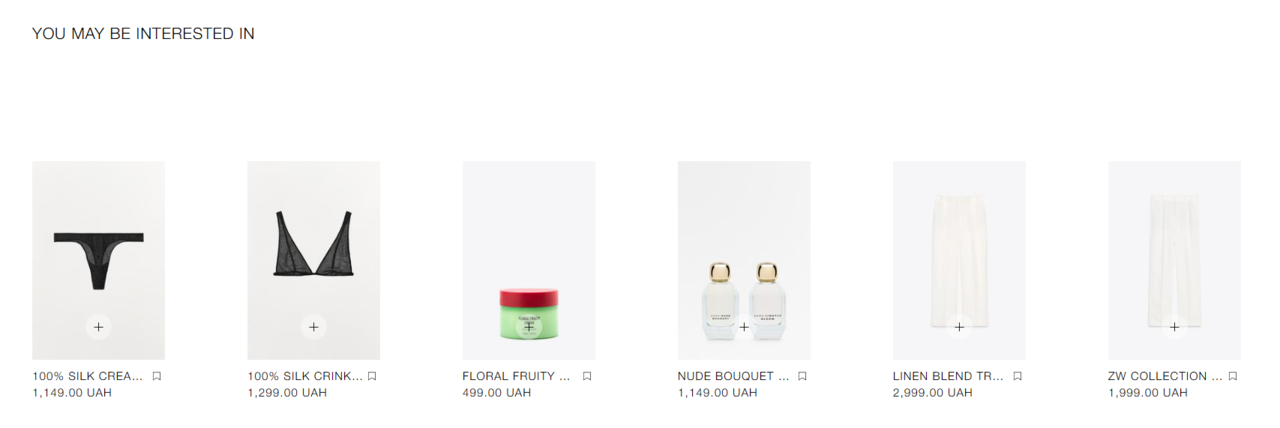 Personalized product recommendations on Zara’s website
By 2023, nearly 60% of global retail decision-makers had already implemented generative AI to assist sales staff with in-store product recommendations. Another 39% were actively exploring how to adopt it. Many took it even further:
- 55% used generative AI to build conversational shopping assistants;
- 52% created virtual product mockups for online stores;
- 51% generated personalized product bundles tailored to each customer.
AI analyzes customer behavior, including clicks, views, time spent on pages, and purchase history, to predict what a shopper is likely to want next. Unlike basic “bestsellers” or manual cross-sells, recommendation engines leverage collaborative filtering and deep learning to suggest products that align with individual tastes or those of similar users. As a result, a company can achieve higher conversion rates and a significant increase in average order value, often without requiring any changes to the website itself.

Join 3M+ businesses growing with SendPulse
From solo creators to global brands, millions trust SendPulse to run email campaigns, chatbots, automations, and more — all in one place. Get started for free now!
Get started for free
Even small businesses can benefit from AI. Many CMS platforms offer plug-ins or API integrations with AI-powered recommendation engines. There’s no need to create a custom solution from scratch. Just connect the right tool and start feeding it your data.
These recommendations aren’t limited to websites. They can also be used in email campaigns or direct communication with users. Take OpenTable, for example. The company sent an email campaign with personalized recommendations for restaurants the user might like.
In the message, they clearly state that the suggestions are based on places the customer has visited before. This approach is more likely to capture the subscriber’s attention, as the recommendations aren’t random but reflect the person’s taste and past experiences.
Another effective strategy is integrating AI into chatbots on your website or within messaging apps. Platforms like SendPulse enable businesses to set up AI-driven chatbots that provide personalized product suggestions to each user. If a customer asks for a skincare solution, for example, the AI assistant can analyze their request and instantly recommend relevant products directly within the chat.
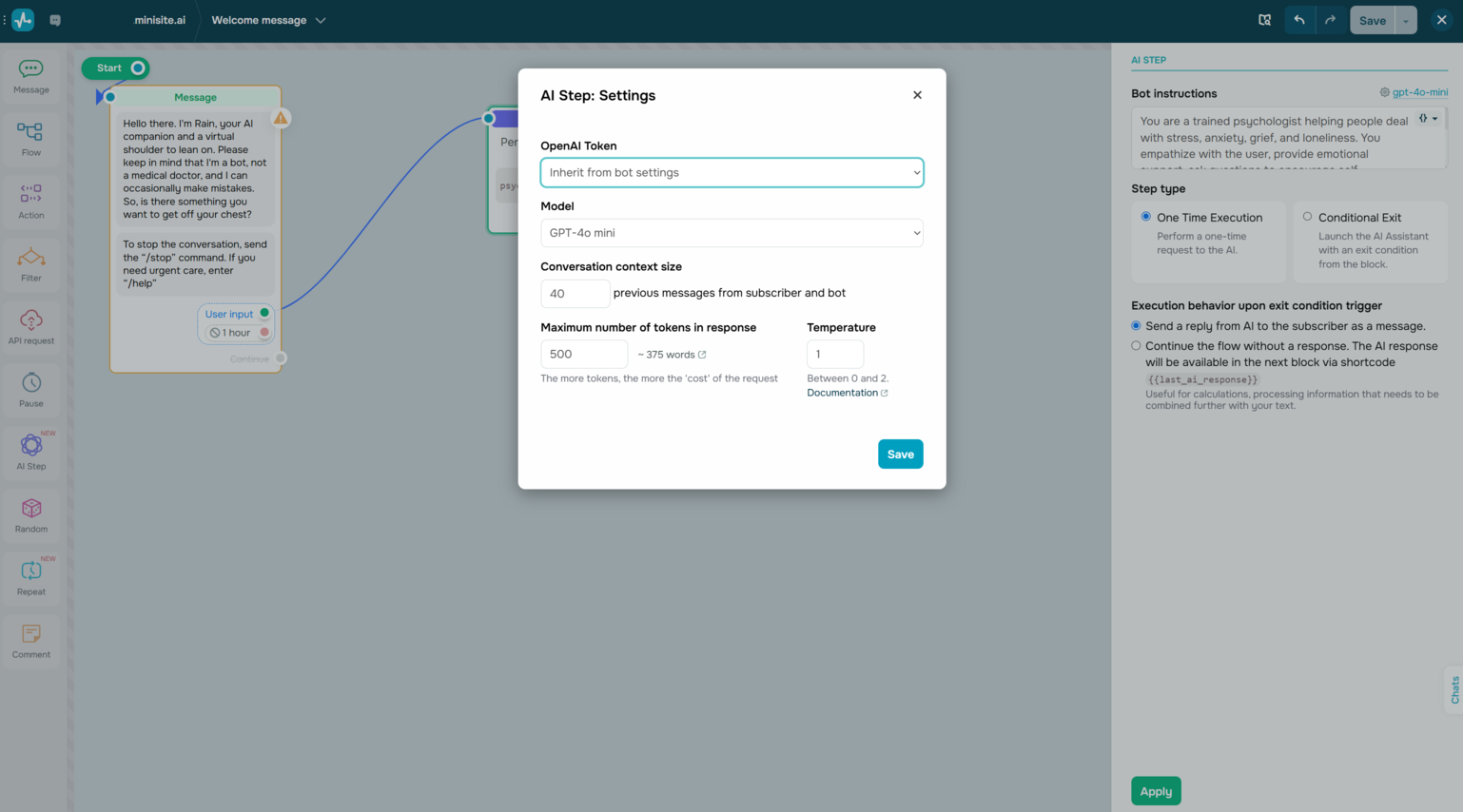 AI settings for a SendPulse-powered chatbot
AI-powered virtual assistants
Customers don’t want to wait, and they shouldn’t have to.AI chatbots and virtual assistants give customers instant, 24/7 help with everything from tracking an order to asking about a product. SendPulse’s customer support chatbots for eCommerce are made for exactly this: a single bot answers order-status and product questions on your website, WhatsApp, Instagram, and Messenger, and passes the chat to an agent when it needs to.. However, for them to be truly effective, they need more than just scripted responses.
Every 30-second delay in lead response can drop conversion rates by around 8%. Speed matters, and that's where AI can be a game-changer.
SourceVladyslav Bohachenko
Head of Sales at RAI
Natural language processing helps chatbots understand real human language, not just keywords. This allows them to respond accurately to vague or complex queries, such as “I need a summer dress under $50” or “What’s your return policy for sale items?” With this capability, businesses can offer faster customer service, reduce support workloads, and keep customers from bouncing away in frustration.
Start by building a basic FAQ chatbot that can already handle most common customer questions. Platforms like SendPulse offer intuitive builders that let you create these bots in minutes, which can be used on:
Such chatbot builders offer a unified interface, allowing you to easily set up automated responses, which reduces the workload for live operators and enables users to find the information they need more quickly.
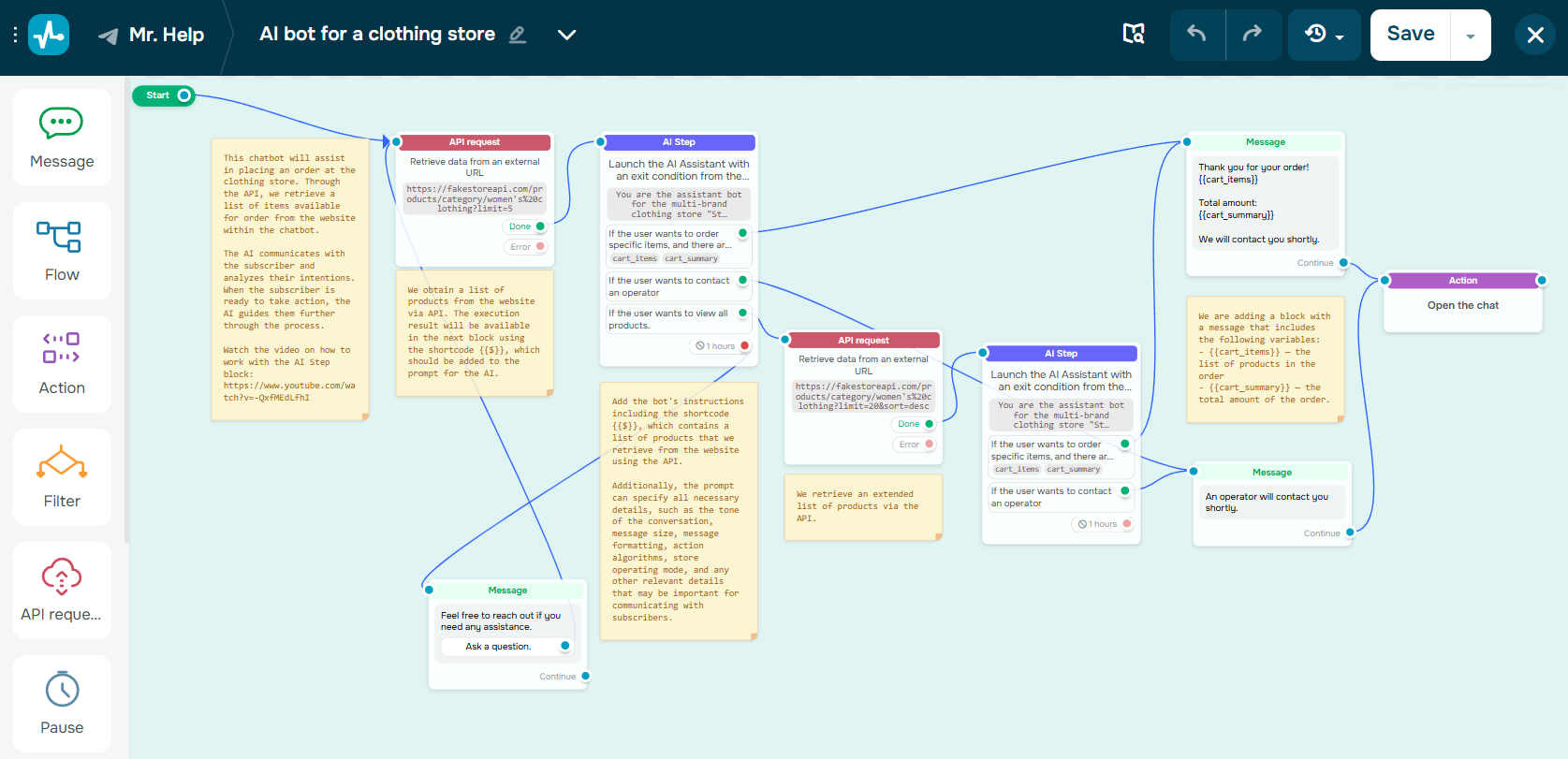 SendPulse’s chatbot builder
You can personalize chatbot messages, enable users to track their orders, leave reviews, or share other data, with all this information being automatically saved to SendPulse’s built-in CRM system.
The platform’s “AI Step” element enables your bot to handle unpredictable, open-ended queries, such as assisting a user in choosing a gift or troubleshooting vague requests. It can even tag users based on intent (e.g., “interested in electronics”) and escalate complex issues to human operators when necessary.
Zeelo, a managed transportation platform for businesses, schools, and manufacturers, uses an AI chatbot to streamline customer interactions.
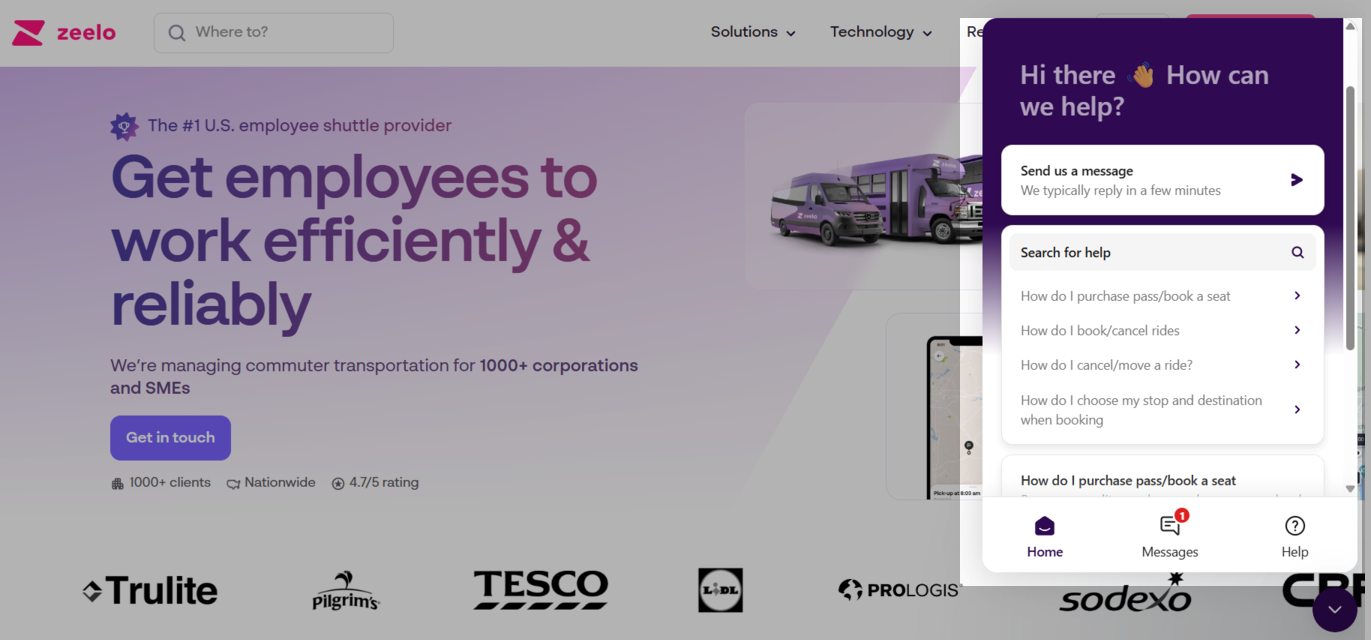 An AI-powered chatbot on the Zeelo website
Acting as a virtual assistant, this bot guides users through service-related questions, helps them navigate transport options, and connects them with the right human agent when needed. It reduces wait times and ensures visitors receive timely, relevant support without having to search through FAQ pages or fill out contact forms.

Try our visual chatbot builder
With SendPulse, you can easily craft AI-powered chatbots on your website, WhatsApp, Telegram, Facebook, and Instagram. Get started for free with up to three bots and 10,000 messages each month.
Get started for free
Conversational commerce with AI sales chatbots
Traditional online shopping often leaves customers alone with a product catalog. There is no context, no guidance, just endless scrolling. AI sales chatbots transform that experience by acting as virtual in-store assistants. Rather than waiting for customers to figure things out on their own, these bots initiate conversations to guide users effectively. SendPulse’s retail bot does this job in every chat channel: it shows your catalog right in the conversation and accepts payment without sending customers anywhere else.
For example, they might ask:
- “What kind of product are you looking for?”
- “What’s your budget?”
- “Is this a gift or for yourself?”
With each response, the sales chatbot narrows down the options and recommends relevant products, making the shopping process faster and far less overwhelming. The goal is to help users make confident decisions, which naturally boosts conversions.
This guided selling format works especially well for mobile-first shoppers who expect instant support and minimal friction. AI sales chatbots don’t just respond, they ask questions at the right moment to help users progress in their purchasing journey.
Here’s how conversational commerce unfolds in real AI use cases in eCommerce:
- First-time visitor onboarding. Instead of letting users browse aimlessly, a chatbot can greet them with a simple question: “Looking for something specific?” Based on a few answers, it builds a product shortlist like a personal shopper, but faster. This can keep bounce rates low and improve first-session conversions.
- Niche or technical product selection. For verticals like electronics, supplements, or skincare, customers often feel overwhelmed by the sheer number of choices. A chatbot can simplify this by asking: “Do you prefer wired or wireless?” or “What’s your main skincare concern?” In the background, the bot filters out irrelevant options, showing only the most relevant products.
- Personalized bundles and kits. Rather than pushing individual items, the chatbot can suggest curated bundles, like a “starter kit” for new parents or a “home office essentials” set. This adds value and makes the purchase feel more intentional.
- Real-time promotion guidance. Users often miss out on discounts or product bundles because they don’t notice them. A chatbot can nudge them with a friendly message like: “You’re $10 away from free shipping! Want to see our top-rated items under $10?” This approach feels helpful, not pushy, and increases cart value.
- Conversational checkout nudges. If a customer adds an item to their cart but doesn’t complete the purchase, the chatbot can pop up later with a gentle reminder: “Still deciding? Want to see customer reviews?” or “Need help comparing options?” This can significantly reduce cart abandonment without using a hard-sell approach.
Casper, a sleep product company that sells mattresses, pillows, and bedding, uses an AI chatbot on its website to guide users through product selection, answer delivery-related questions, and provide detailed product information, all in a simple and conversational format. This approach makes the experience more engaging and helps customers make informed decisions.
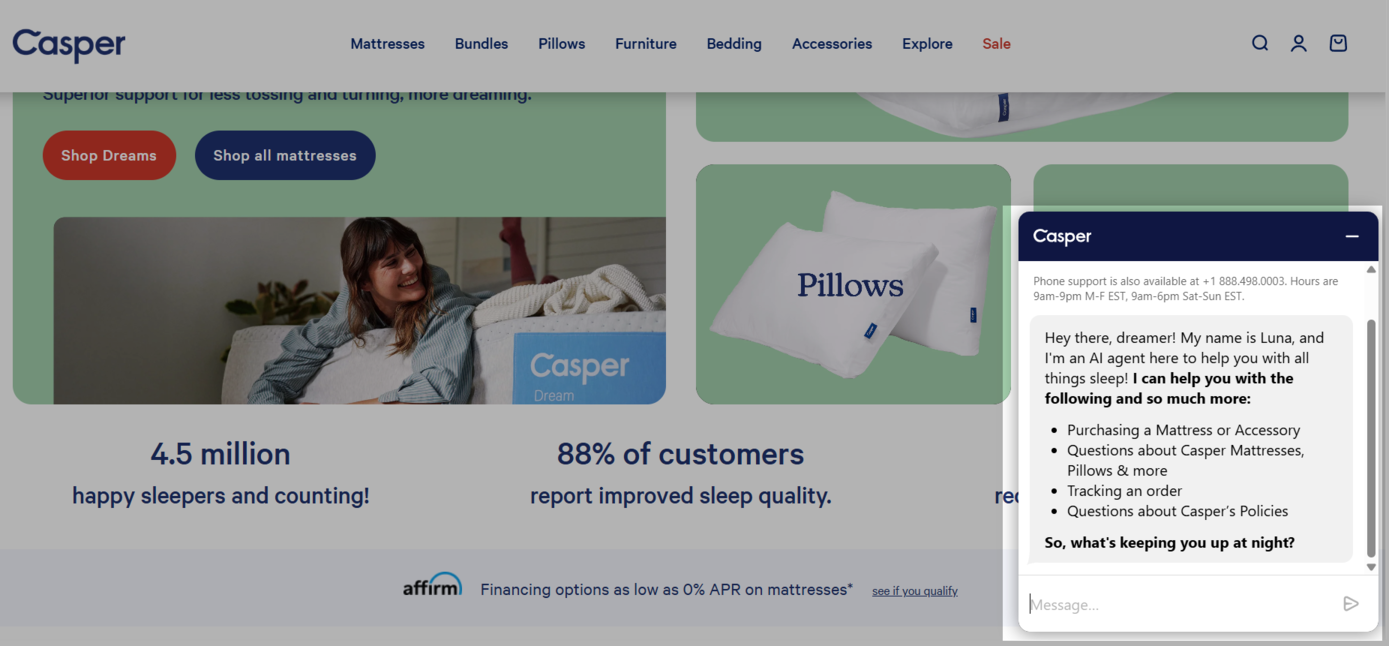 AI-enhanced chatbot on the Casper website
Visual search and image recognition
Not every shopper knows how to describe what they’re looking for. Maybe they saw a chair on Instagram or a jacket on the street. Instead of typing vague terms like “brown modern armchair” or “green puffer coat,” visual search allows them to simply snap a photo and find a match.
AI-powered image recognition analyzes the shape, color, texture, and other key features of an uploaded image, then compares it to your product catalog. This process eliminates guesswork and accelerates the path to purchase. Visual search is particularly useful in visually driven categories, such as fashion, home decor, and furniture, where aesthetics play a significant role in purchasing decisions.
You don’t need a large tech team to get started. APIs like Google Vision or AWS Rekognition can help you easily integrate visual search into your catalog.
A great example of this is ASOS. This fashion retailer uses visual search through its app’s “Style Match” feature. Users can upload a photo from their gallery or take a new one, and the app will instantly show similar items from ASOS’s inventory. This helps potential buyers find specific styles without relying on text descriptions.
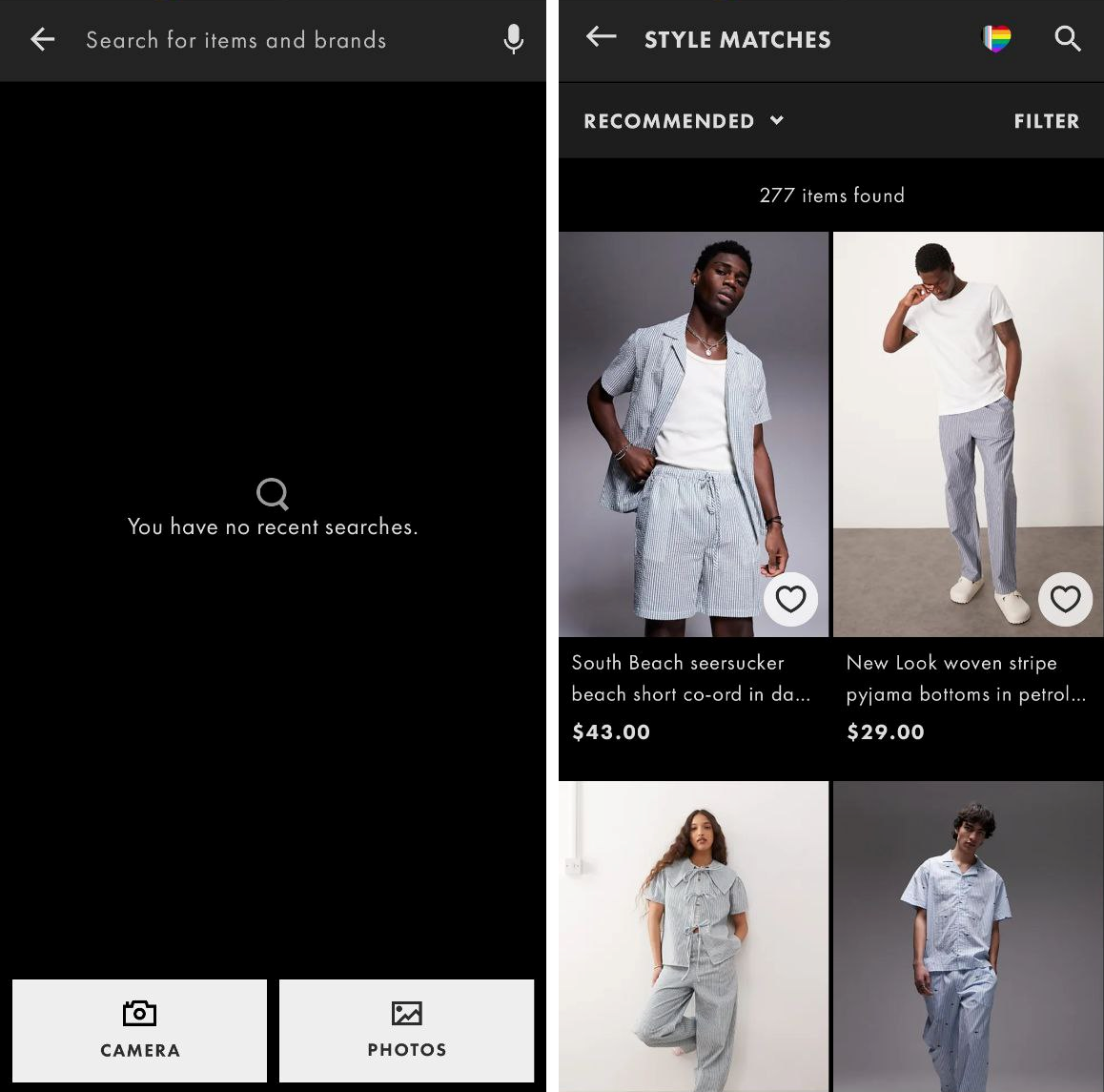 A visual search tool by ASOS
Dynamic pricing optimization
Demand fluctuates, inventory levels change, and competitors constantly update their offers. If your prices don’t adjust accordingly, you risk losing out on sales or hurting your margins.
AI in eCommerce takes the guesswork out of pricing. It monitors real-time data, such as product availability, browsing behavior, time of day, seasonal trends, and competitor pricing, to automatically adjust your prices. Unlike manual updates or fixed discount rules, AI reacts instantly to market signals, so you stay both competitive and profitable.
For example, if a product is trending but inventory is running low, the system may raise the price slightly to maximize margin. If a competitor drops their price, your store can react with a limited-time offer without waiting for a human to notice.
There are many platforms offering ready-made solutions for implementing dynamic pricing. For example, Intelligence Node uses real-time competitor tracking, inventory data, and demand forecasting to deliver smart, SKU-level pricing recommendations. It helps retailers adjust prices dynamically without manual effort.
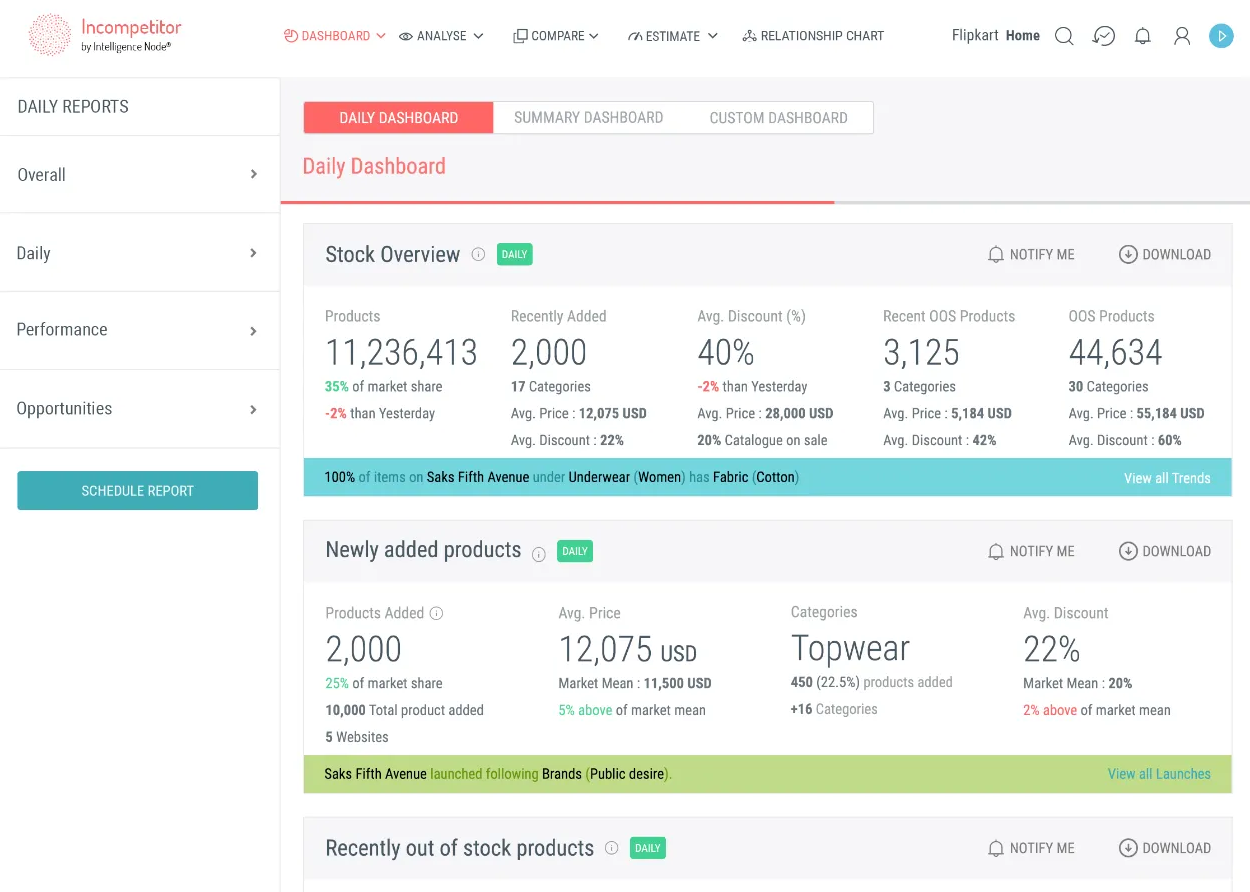 Price intelligence dashboard with product insights and recommendations; source: Intelligence Node
Take Amazon, for example. The company’s dynamic pricing lets sellers automatically adjust their prices up to 2,000 times a day based on demand, competition, and external market data. The system is built to help sellers win the “Featured Offer” by staying competitively priced without constant manual updates. It works best for products with multiple sellers and high price sensitivity. However, if you sell niche or premium items, frequent price shifts may do more harm than good.
If you use or plan to implement dynamic pricing, try pairing it with personalized chatbot campaigns. Notify users about price drops or limited-time discounts based on their interests or past behavior. It’s a smart way to turn pricing changes into conversion triggers.
Inventory and demand forecasting
Artificial intelligence in eСommerce doesn’t just make guesses on what’s going to sell. Instead, it learns from your sales history, seasonal patterns, and emerging trends to predict what’s likely to sell, when, and in what quantity. This means fewer stockouts, less unsold inventory, and better use of your storage space.
Rather than relying on outdated spreadsheets or gut feelings, AI aligns supply with real-time demand signals. This is particularly useful during busy periods, such as promotions, holidays, or when consumer behavior shifts unexpectedly.
This approach is especially valuable for businesses dealing with fluctuating demand, short product lifecycles, or high storage costs. For instance, fashion retailers need to anticipate seasonal trends and avoid over-ordering items that may quickly go out of style. Consumer electronics brands face similar challenges, as outdated inventory loses value quickly. Home decor and furniture stores often have bulky items with high holding costs, so accurate forecasting is crucial to minimizing warehouse expenses.
To get started, connect your AI tool to your enterprise resource planning or warehouse management system. Many platforms now offer plug-and-play forecasting modules that take the heavy lifting out of the equation, allowing your team to focus on growth and strategy.
Two excellent tools to consider for AI-powered demand forecasting are Logility DemandAI and Datup.ai.
Logility DemandAI uses machine learning and generative AI to forecast demand, simulate “what-if” scenarios, and model promotions. It’s built for complex supply chains and supports multi-location inventory, ERP integration, and sales and operations planning. It is best suited for large retailers, manufacturers, and enterprises managing high SKU volumes.
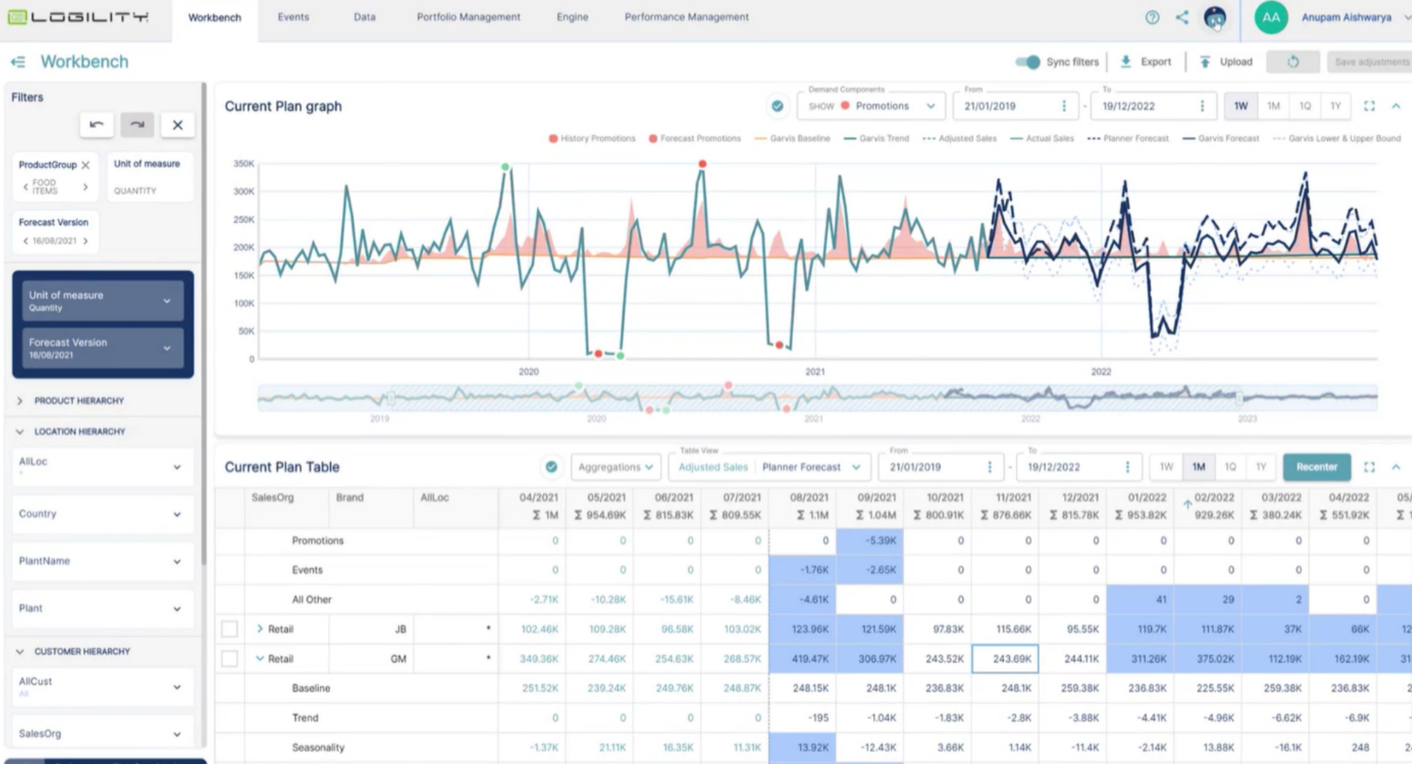 The Logility DemandAI interface
Datup.ai offers faster deployment and a more intuitive interface. It analyzes past sales, seasonality, and trends to predict future demand and determine optimal stock levels. It’s ideal for smaller to mid-sized eCommerce businesses looking to improve planning without heavy infrastructure or tech expertise.
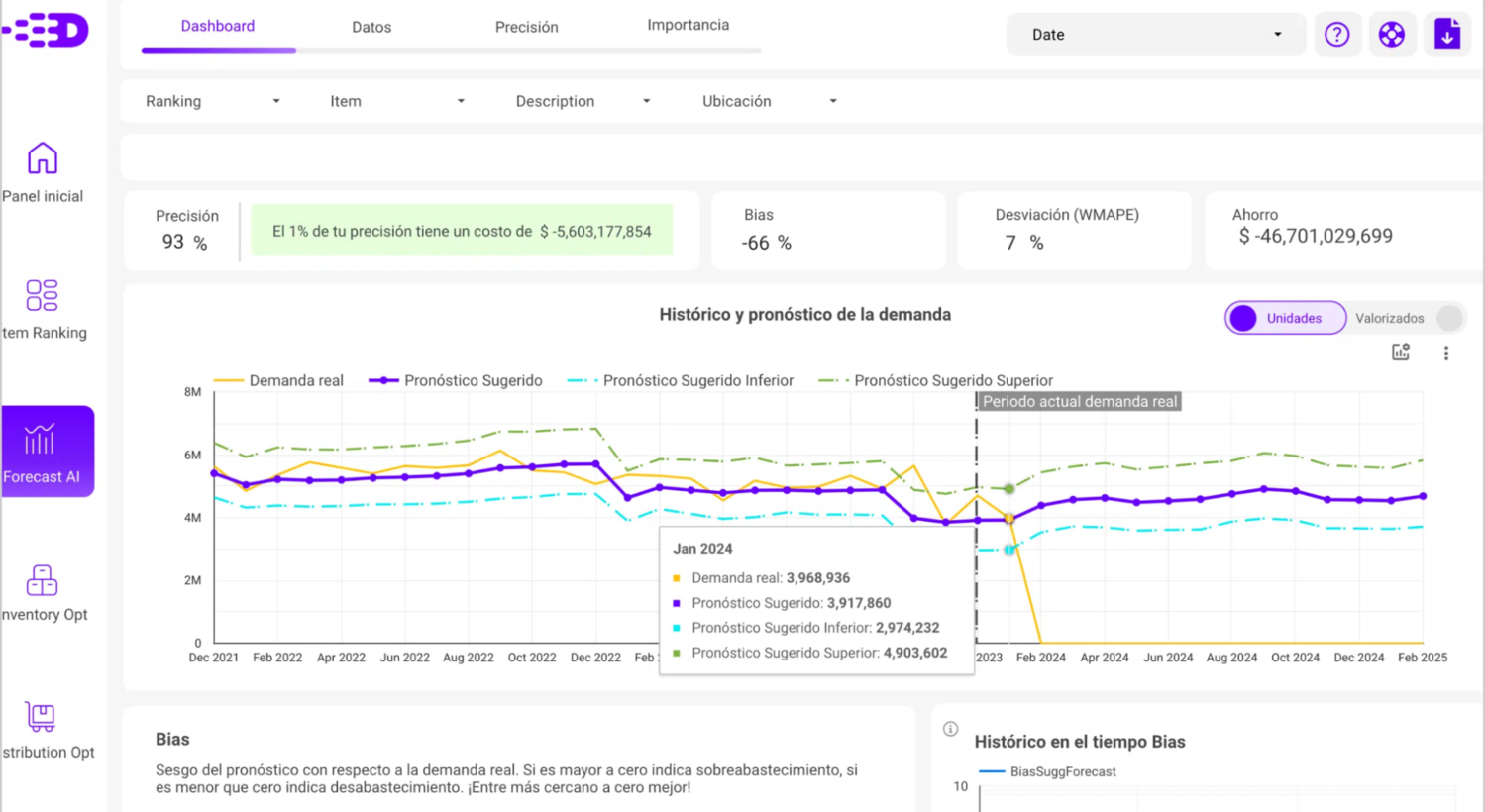 The Datup.ai interface
Customer segmentation and targeting
Customer segmentation is the process of dividing your audience into meaningful groups based on shared traits, such as demographics, behavior, purchase intent, and engagement patterns. AI takes this further by analyzing vast data sets to identify nuanced clusters that traditional methods often miss.
Nobody can beat the power of AI when it comes to predictive analytics. People are seeing 20-30% return on investments on average on AI-powered analytics
SourceNrupesh Soni
Founder at Facilit8 Namibia
Effective segmentation is crucial because treating all customers the same weakens your marketing efforts. By targeting specific segments with personalized messages, you can enhance engagement, decrease churn, and increase conversions. Simply put, segmentation helps you understand who your customers are, while targeting shows you how and when to connect with them effectively.
This strategy is especially useful for businesses with diverse customer bases or a wide range of products. For instance, retailers can use it to identify frequent shoppers and occasional browsers, allowing them to send discounts to encourage purchases or loyalty rewards to keep repeat buyers engaged. Marketplaces can adjust promotions based on factors like location or spending habits, making offers more relevant. This focused targeting helps businesses connect with customers in a way that aligns with their unique behaviors and preferences.
AI-driven segmentation continuously updates these groups based on real-time behavior and emerging trends. This dynamic targeting ensures that your messages remain relevant to your customers’ current needs and purchase intent.
This type of targeting is effective across multiple channels, not just email. You can trigger personalized SMS, push notifications, chatbot replies, or paid ads, all driven by the same AI-generated segments. For example, you could send frequent browsers limited-time offers via SMS or offer high-value customers exclusive early access to new drops via chatbot campaigns. The more relevant the message, the higher the chances of conversion.
For example, using artificial intelligence in eCommerce, you could target customers who frequently buy from a specific brand and notify them when new items from their favorite brand arrive or when those products go on sale.
 The Benefit Cosmetics personalized SMS; source: Mailcharts
Product categorization and auto-tagging
Manually tagging thousands of stock-keeping units can be slow, tedious, and prone to errors, especially when new products are added daily. Using natural language processing and image recognition, AI can automatically categorize products, generate relevant tags, and clean up messy catalogs in minutes.
This automation is a real time-saver and directly impacts the customer experience. Clean, consistent product data improves search accuracy, filters, recommendations, and even ad performance. When customers can easily find what they’re looking for, they’re more likely to make a purchase.
Fashion retailers can auto-tag by color, style, or fabric. Marketplaces can standardize listings across thousands of vendors. Electronics stores can automatically surface specs and compatibility tags. Even B2B catalogs benefit from AI, as it can classify industrial parts or equipment by their function and use case.
A tool like Clarifai can automatically label product images with attributes such as color, material, category, and style. This helps eCommerce teams manage large catalogs without the need for manual tagging, making it easier to organize listings and improve search accuracy. You can even train custom models for niche products or use pre-built templates to get started quickly.
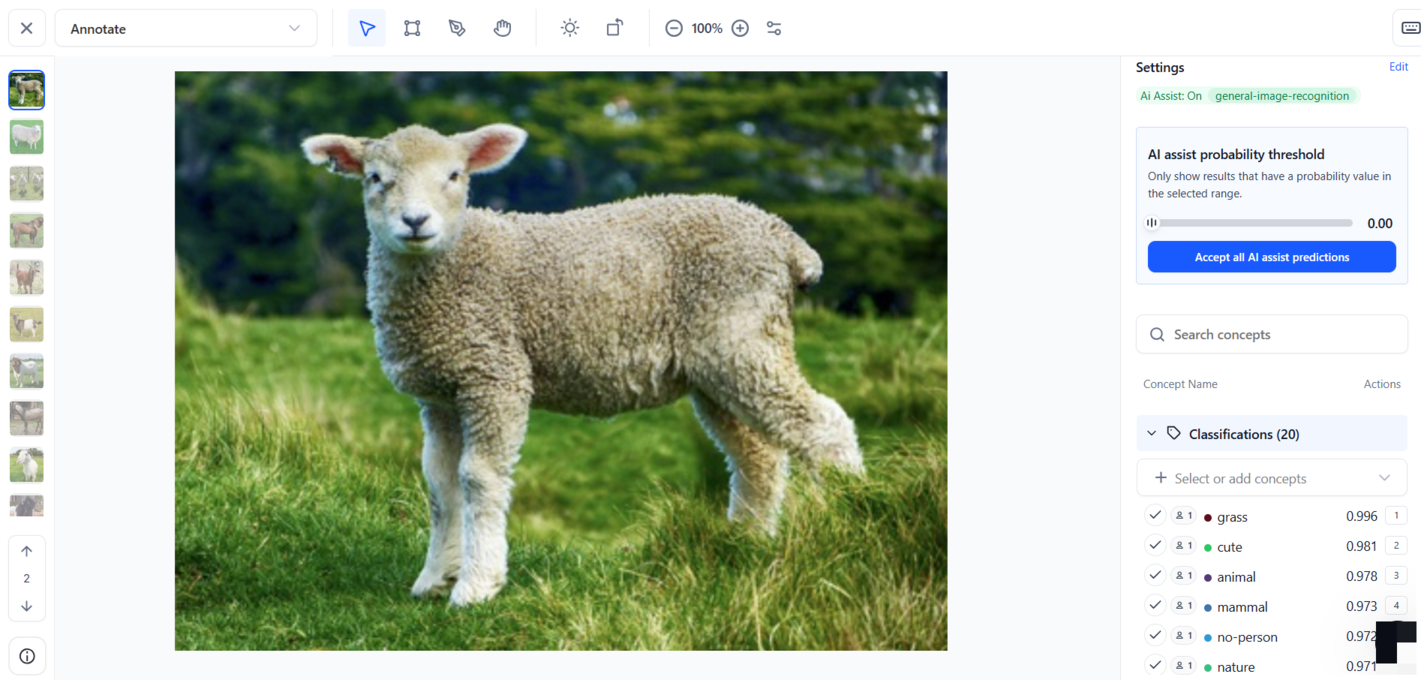 AI-assisted labeling by Clarifai; source: Clarifai
Personalized email and SMS campaigns
AI-powered personalization does much more than just inserting a first name into a subject line. It enables you to send the right message, at the right time, in the right tone, based on real user behavior.
Using AI, you can analyze browsing history, purchase intent, and engagement patterns to determine when to send a message, which products to highlight, and how to frame the offer. For instance, one user may respond better to urgent offers with discounts, while another might prefer gentle nudges with curated product suggestions.
Here’s a campaign example that combines intent, timing, and tone to create a high-converting flow:
- Campaign idea: “Back in stock — and just for you.”
- Channel mix: Email first, followed by SMS if the email is not responded to.
- Trigger: Item restocked.
- Audience: Individuals who viewed or added the item to their cart but didn’t make a purchase.
- Timing: Sent within 30 minutes of the item being restocked (AI determines the optimal time per user.)
The email would feature the product with a subject line like: “You almost had this in your hands.” It also includes two cross-sell suggestions, but these aren’t random; they’re based on the user’s browsing history.
If the email isn’t opened within a few hours, a short SMS follows up:
“[Name] your saved item’s back. Grab it before it’s gone (again). [link]”
This campaign feels personalized rather than automated. The timing, tone, product suggestions, and even the backup SMS are all tailored to each individual user’s preferences, creating a message that feels more like a helpful reminder than a pushy sales tactic.

Communicate with customers across multiple channels
With SendPulse, you can reach your target audience through a communication channel they prefer — be it email campaigns, web push notifications, SMS messages, live chats, or chatbots in WhatsApp, Instagram, Facebook Messenger, and Telegram.
Get started for free
Abandoned cart recovery with AI
We’ve all received cart recovery messages that feel like spam. But with artificial intelligence in eCommerce, this doesn’t have to be the case. Instead of generic reminders, AI enables you to send personalized messages at the right time through the most effective channel.
AI analyzes each user’s behavior to figure out when they’re most likely to return, which products to remind them about, and what type of messaging will resonate with them. For example, some shoppers respond best to urgency (“Only two left!”), Others prefer reassurance (“We saved your cart”), while some just need a small incentive (“Free shipping if you check out today”).
AI can also select the ideal channel for reaching each customer:
For instance, if a user abandons a high-end item at 9 PM, they might receive a polished email the next morning. On the other hand, someone who drops a hoodie from their mobile cart might get a casual SMS within the hour.
This approach works especially well for industries such as fashion, electronics, or beauty, where cart values are high and decisions are often driven by emotion. But even for low-margin products, smart recovery strategies powered by AI can lead to fewer abandoned carts and more conversions, all without annoying your audience.
Intelligent search autocomplete and intent recognition
When it comes to search, AI focuses on understanding what users mean, even if they don’t type exactly what they’re looking for. Instead of requiring exact phrases, AI-powered search tools consider context, synonyms, and intent.
For example, if you type “comfy shoes for work”, it might suggest office-appropriate sneakers. If you search for “charger,” AI can determine whether you mean USB-C or MagSafe, based on your browsing history or device model.
Autocomplete doesn’t just finish your sentence; it predicts entire queries, surfaces trending products, and adapts to the user’s behavior in real-time. This means users spend less time guessing what to search for and more time finding exactly what they want. This is especially helpful for mobile users or those with unclear needs. AI-powered search also makes it easier for first-time visitors to navigate large product catalogs without getting frustrated.
NLP-driven tools, such as Algolia or Elasticsearch, can be easily integrated with most eCommerce platforms. These tools are particularly valuable for marketplaces, fashion retailers, and electronics stores, where product names can be confusing, and users often search using their own language.
For example, Algolia uses AI to improve search relevance through semantic understanding and intent recognition. Its “AI Search” feature analyzes queries using natural language processing and transforms them into vector embeddings, allowing it to return relevant results even for vague or misspelled inputs.
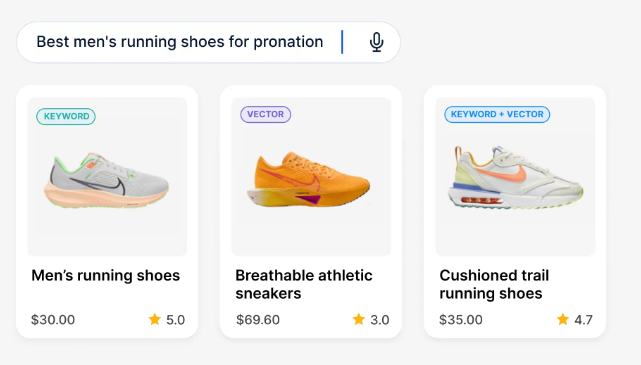 Search results with Algolia AI Search; source: Algolia
Features like dynamic re-ranking, AI-generated synonyms, and neural hashing help users find what they mean. It’s especially useful for large catalogs and fast-paced product discovery.
Fraud detection and risk prevention
Fraud doesn’t always look like a stolen card. It might be a sudden spike in orders from one IP address, a login from an unfamiliar location, or a lightning-fast checkout that doesn’t feel human. This is where AI in eCommerce excels — spotting subtle threats that humans might miss.
If you’re exploring how to use AI in eCommerce, fraud prevention is a smart place to start. Unlike old systems that rely on static rules, modern AI learns from real-time behavior. It understands how legitimate users act, how fraud evolves, and what anomalies to flag before damage is done.
The result is fewer chargebacks, fewer blocked accounts, and less manual review, which means you lose less revenue to false positives and can focus more on real customers.
Tools like Kount or Riskified can integrate seamlessly into your checkout flow. They’re especially useful for eCommerce brands that process payments in-house, especially high-ticket sellers, subscription-based services, and digital goods platforms.
For instance, Kount uses AI to assess the risk of every transaction in real time by analyzing device data, user behavior, and transaction patterns. Its Identity Trust Global Network compares millions of interactions to detect anomalies, reduce chargebacks, and block fraud without creating friction. A platform like this is ideal for businesses that process high volumes of online payments.
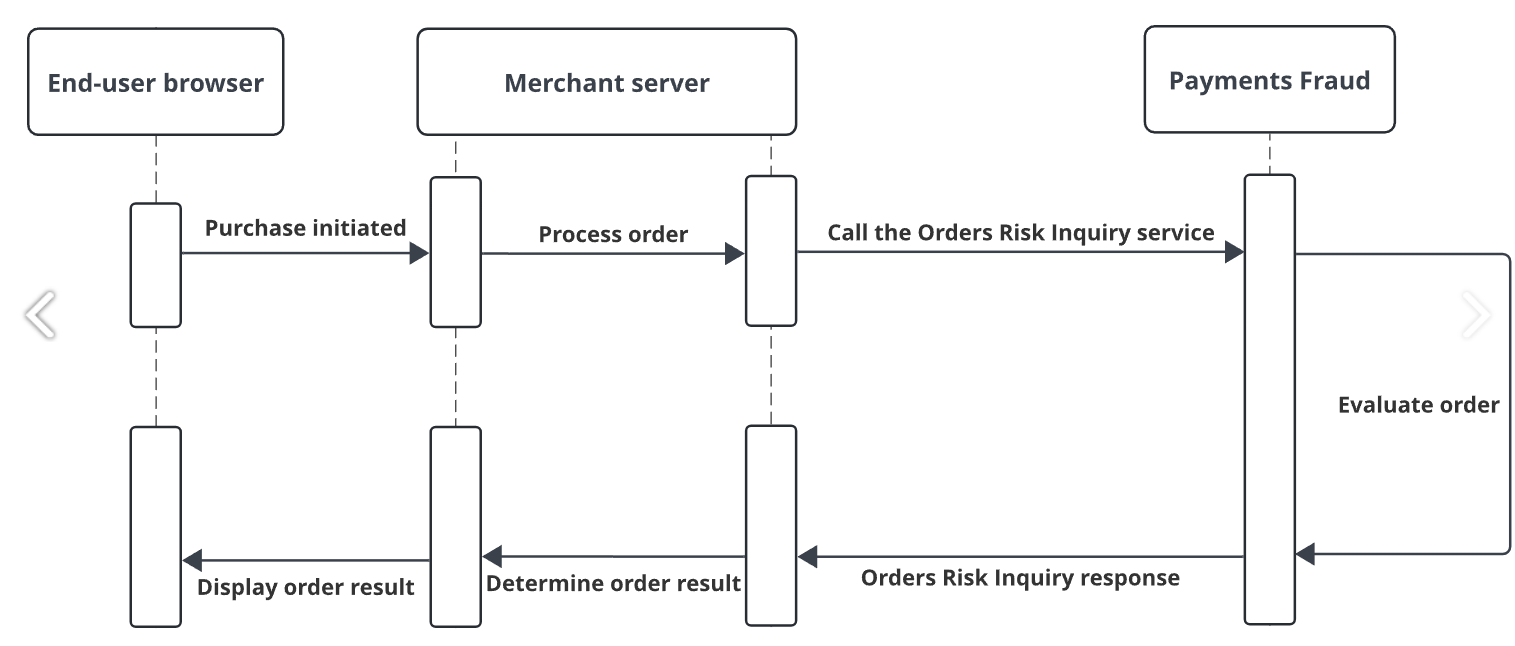 Integration of Kount’s Payments Fraud solution into the payment workflow; source: Kount
Review and sentiment analysis
AI can go beyond just collecting reviews; it can truly understand them. By analyzing product feedback, star ratings, and even emojis, AI in eCommerce can pinpoint what customers love, what frustrates them, and the common themes that keep surfacing.
This enables marketers to gain valuable insights into brand sentiment and product performance in real-time. With AI’s help, it’s easier to identify recurring issues, such as sizing problems or shipping delays, spot early signs of negative buzz, or double down on what’s working.
For marketers, this opens the door to actionable next steps:
- Adjust product descriptions to reflect real customer language.
- Fine-tune ad copy to highlight features people love.
- Reroute negative feedback into support workflows.
- Prioritize fixes for frequently mentioned problems.
- Build smarter segments, such as targeting customers who left positive reviews, with referral campaigns.
For example, ChurnZero scans customer communications, including emails, survey responses, and in-app messages, for sentiment, tone, and key topics. It surfaces shifts in mood or emerging concerns in real time. Instead of discovering issues months later, you get alerts as soon as customer sentiment drops.
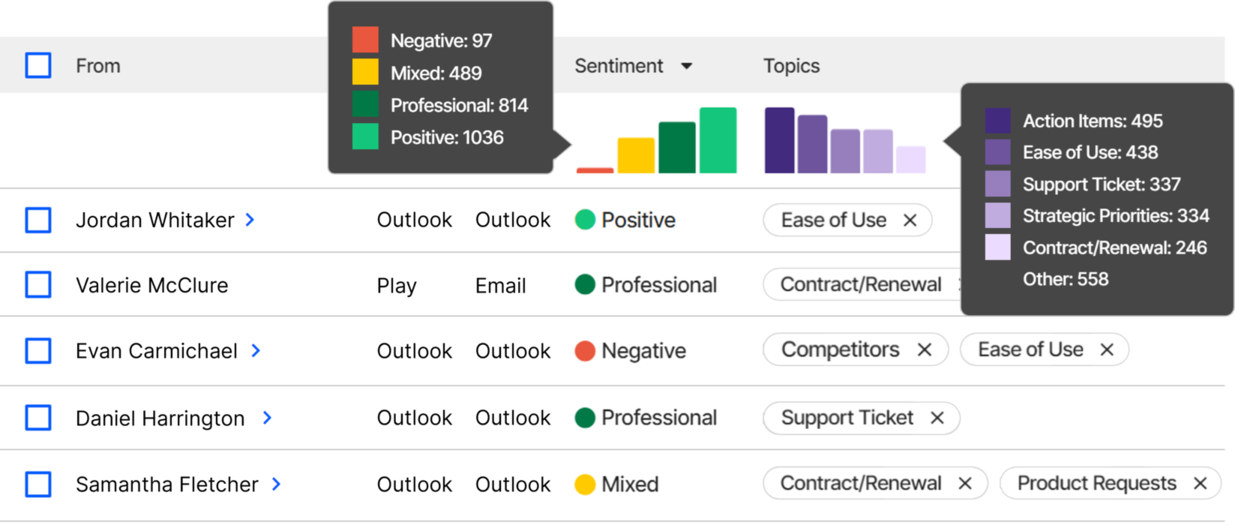 Monitoring customer sentiment in ChurnZero; source: ChurnZero
AI-generated product descriptions
Writing product descriptions at scale can be tedious, but skipping this step hurts conversions and SEO. AI offers a way out by generating compelling, search-optimized copy for every item in your catalog. It extracts key attributes from your product feed and transforms them into clear, useful, and ready-to-publish descriptions.
This approach is especially beneficial for stores with large inventories, where manually writing descriptions is both time-consuming and expensive. Tools like ChatGPT, Jasper, or Copy.ai can be tailored to your brand’s tone of voice and category-specific language, ensuring consistency across your entire catalog.
For instance, ChatGPT offers a free version that allows you to fine-tune your profile. This ensures the AI generates content that’s highly relevant to your store, giving you descriptions that feel personal and on-brand.
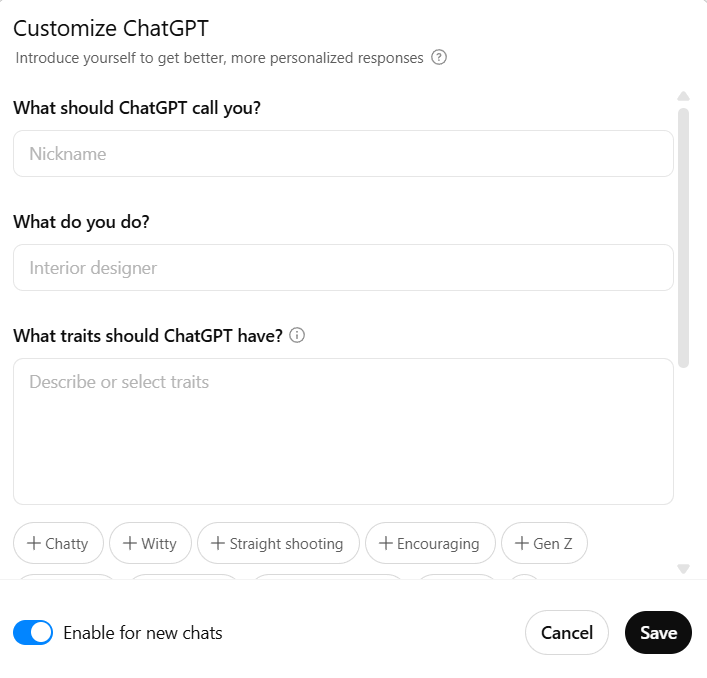 ChatGPT customization
SendPulse’s AI assistant for website building can instantly create product descriptions, headlines, calls to action, and even entire sections of your store. With just a short prompt, you can get ready-to-publish content, saving you valuable time and effort.
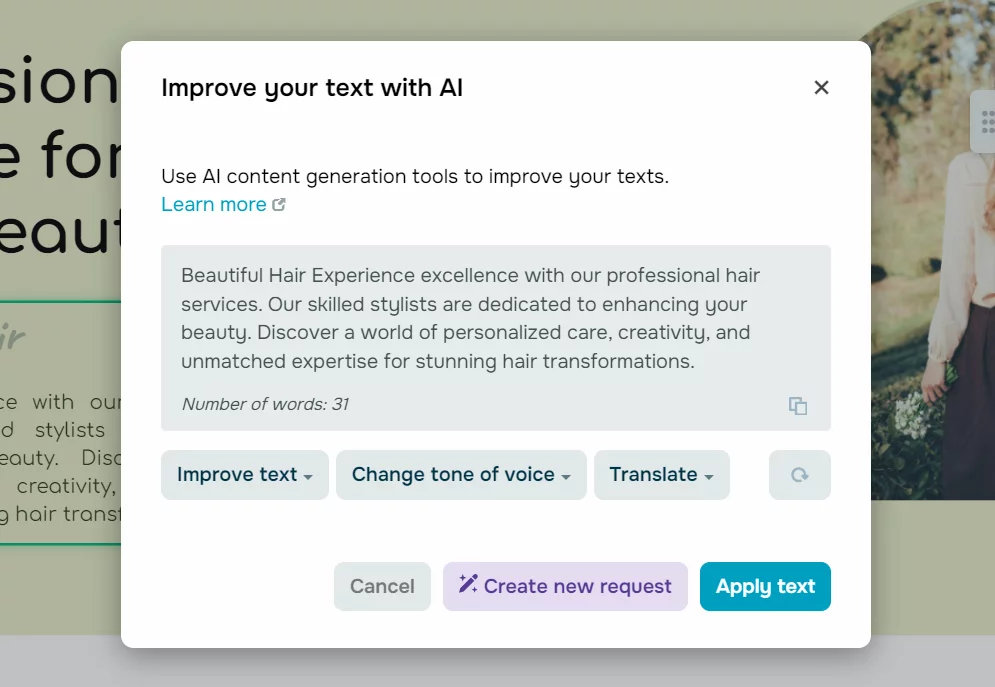 Improving website copy using the SendPulse writing assistant
Voice commerce and smart assistants
Voice shopping is quietly becoming an essential part of the shopping experience, especially for everyday purchases. Customers are already using voice assistants like Alexa and Google Assistant to reorder groceries, track packages, or search for products hands-free.
And this trend is only growing. According to eMarketer, the number of voice assistant users in the U.S. is expected to rise to 162.7 million by 2027. This means that more people will increasingly rely on voice to manage their shopping, particularly for simple, low-effort transactions.
While voice commerce may not be a top priority for small online stores just yet, it’s worth preparing for the future. Start by making your product data easy to interpret, using natural language in product descriptions, and testing how your store appears in voice search results. Tools like Algolia Voice Search can help by turning spoken queries into relevant results using natural language processing and typo tolerance.
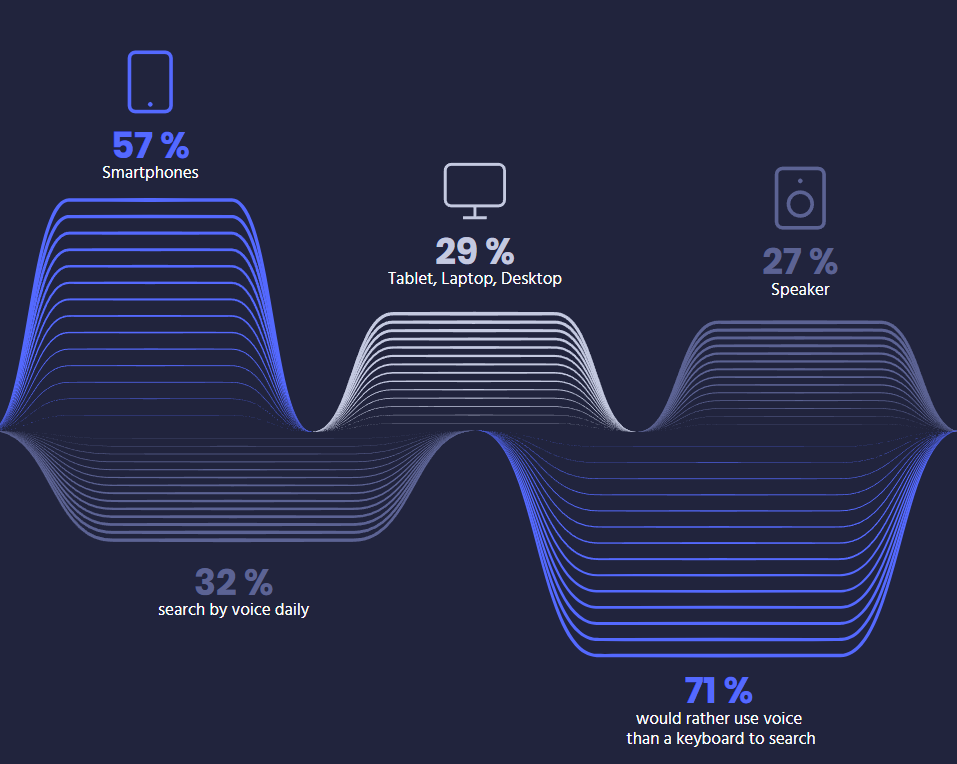 Voice usage according to Algolia data; source: Algolia
Voice search technology is compatible with various platforms, including mobile apps, mobile websites, and smart assistants. This makes shopping by voice smoother and more accurate. It’s ideal for brands preparing for hands-free, conversational buying experiences.
Additionally, SendPulse offers speech recognition in AI chatbots. That means users can interact with your bot by voice, asking questions, obtaining product information, and even placing orders hands-free. It’s a step toward building voice-friendly shopping experiences without extra development.
Personalized on-site experiences
AI in eCommerce can shape the entire shopping experience based on who’s browsing. From the moment a visitor lands on your homepage, AI can adjust what they see: product recommendations, banners, offers, even pop-ups. All of it tailored to their behavior, location, or purchase history. Here are some ways AI can personalize the experience:
- a returning visitor might see a hero banner with recently restocked products they viewed last month;
- first-time users can trigger a personalized pop-up with a welcome discount;
- high spenders may get promoted to bundle deals or premium collections;
- visitors from colder regions could see winter gear first, while those from warmer areas get summer stock up front.
Platforms like Nosto can help you easily implement these strategies. Nosto allows online stores to deliver personalized on-site experiences by showing tailored product recommendations, dynamic content blocks, and targeted pop-ups, based on individual visitor behavior and preferences.
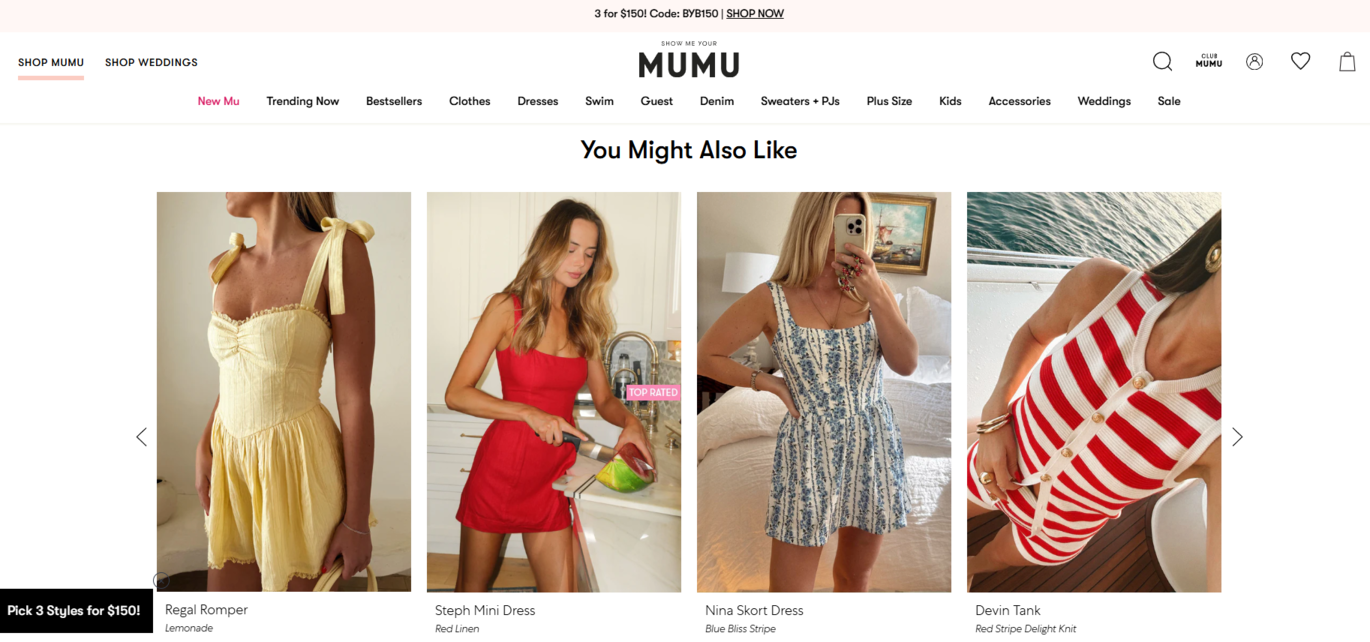 Product recommendations on the MUMU website powered by Nosto; source: Nosto
Chat-based product discovery
AI-powered chatbots recreate the personalized guidance of a skilled store assistant by engaging shoppers in a conversational way. Instead of browsing endless categories, users answer a few targeted questions about budget, style, needs, or preferences and receive tailored product recommendations.
For example, a fashion retailer’s chatbot might ask about preferred colors and occasions to suggest outfits, while an electronics seller could guide buyers based on intended use and price range. Even a B2B supplier can help clients find the right tools by clarifying industry and project scope.
Here are some tips for effective chat-based discovery:
- keep questions clear and purposeful, as each should narrow options meaningfully;
- use conditional logic so conversations adapt naturally to user answers;
- integrate product inventory data in real time to recommend only available items;
- combine chat recommendations with quick links or buttons for seamless checkout;
- collect insights from chats to refine product assortments and marketing strategies.
Predicting and preventing returns
Returns hurt profit margins and disrupt inventory flow, but AI can help you get ahead. By analyzing past return patterns, purchase data, and customer behavior, AI flags orders with a high risk of being returned before they even ship.
This insight allows you to intervene early, offering proactive sizing advice, suggesting alternative products, or providing more detailed descriptions to reduce uncertainty.
Here are some examples of how different industries can use AI to prevent returns:
- Apparel. Utilize AI-powered fit guides to recommend the ideal size and alert shoppers to common return triggers, such as incorrect measurements.
- Consumer electronics. Recommend alternative models if the customer’s initial choice has a high return rate.
- Home goods. Display 360° views or augmented reality previews to set clearer expectations for the product.
Here are some practical ways to enhance the effectiveness of your AI-driven return prevention strategies:
- Combine AI-driven return risk scoring with personalized messaging to educate buyers before purchase.
- Use data from returns to continually improve product descriptions and photos.
- Integrate AI sizing tools directly into product pages for seamless guidance and support.
- Monitor changes in return patterns to adjust your inventory and marketing strategies in real time.
Warehouse automation and robotics
Warehouse automation powered by AI is transforming how businesses handle sorting, picking, and packing. Intelligent robots streamline these tasks with precision, speeding up order fulfillment while reducing human error. This shift can cut labor costs and enhance accuracy, improving customer satisfaction.
Such technology is most impactful for medium to large-scale eCommerce operations where volume and speed are critical. Smaller businesses may find limited value, but for growing warehouses, AI-driven automation can scale operations without proportionally increasing overhead.
Investing in these systems prepares businesses for future demand surges and raises the baseline for operational efficiency, making fulfillment both faster and more reliable.
Customer lifetime value prediction
Knowing which customers will bring the most value over time is crucial for effective marketing. AI-driven customer lifetime value (CLVT) prediction analyzes past behavior, purchase frequency, and engagement patterns to estimate each customer’s future worth.
This valuable insight helps businesses focus on high-value customers, allowing for tailored retention campaigns, personalized upsell offers, and strategic investments in loyalty programs.
The benefits are clear: efficient budget allocation, higher ROI, and stronger customer relationships. For example, brands can identify high-value customers at risk of churning and proactively engage them or offer exclusive rewards to top spenders.
To maximize CLTV prediction, integrate it with segmentation and automation. Utilize AI predictions to trigger personalized messages, including special discounts, exclusive content, or early access to new products. Keep your data fresh by revisiting your models regularly and adjusting marketing strategies to align with evolving customer behaviors.
Conclusion
AI can take over the heavy lifting across almost every task and operation in eCommerce. It’s not just about working faster, it’s about working smarter. With AI, teams can deliver better experiences at every step: more relevant product suggestions, faster and smarter search, personalized offers, and smoother communication.
For customers, that means less friction and more value. For businesses, it means better results with less manual effort.
If you’re wondering how to use AI in eCommerce, the answer is simpler than you think. You don’t need to build everything from scratch. With SendPulse, you get AI-powered tools that are ready to use, whether you’re building a website, setting up a chatbot, or launching campaigns. Start using AI in eCommerce where it matters most and let it scale with your needs.