
Mobile marketing is a method of promoting products or services through mobile devices. With this strategy, target consumers access location- and time-sensitive, customized content that promotes specific products, services, or ideas.
In this video, Constantine Soika, a project manager at SendPulse, explains how to strengthen marketing with mobile messaging.
In this article, we’ll unveil the importance of mobile marketing, review its various types, and demonstrate how to implement it effectively. We’ll also discuss mobile marketing strategy, examples, and best practices.
Why is mobile marketing important?
In a world where people always hold their phones and check them frequently, mobile marketing is essential for a successful business. You can interact with potential customers, share important updates, and notify them about discounts, sales, and special offers using smartphones. It enables you to deliver all messages directly to your customers based on their preferences, location, needs, and issues. There are numerous reasons why mobile marketing is crucial in the modern landscape, and here are the main ones supported by statistics:
- SMS has a high open rate amounting to 98%, which makes it a great channel for promotion.
- In 2024, mobile advertising spending is around 400 billion US dollars.
- On average, people spend more than 4 hours on their smartphones.
- As of 2024, over 60% of internet traffic originates from mobile devices.
Now that you have some statistics, it’s time to review the benefits of mobile marketing. They will help you decide whether it’ll be helpful for your business.
Benefits of Mobile Marketing
Compared to other forms of marketing, mobile marketing has several significant benefits. Here are the most essential ones.
- Text messaging is easy and comparatively cheap. Considering traditional advertising methods, such as TV ads or print ads, SMS is obviously cheaper. Similar to ad formats like PPC or email marketing campaigns, text messages are straightforward to send and do not require any technical expertise.
- SMS has a high CTR. Since people perceive communicating through their mobile devices as more private than emailing, for instance, they check their phones more frequently and are less likely to overlook messages. Users choose to share their phone numbers only with their favorite companies, which means they are already looking forward to your promotions.
- Especially useful for local businesses. Local companies can easily tell their loyal customers about hot deals, the latest arrivals, and special offers via SMS. Clients won’t miss this chance to drop in to check out your offers.
The benefits are clear, so let’s move on to exploring the types of mobile marketing you can utilize. The next section will provide insights into the options available for ensuring a seamless customer experience on smartphones.
Types of Mobile Marketing
There are various mobile marketing techniques to try for a business. Factors such as your budget, specific industry, and customer segment significantly influence the success of the strategy. That said, below are some mobile marketing options.
- Mobile app marketing. Mobile apps enable businesses to incorporate ads into specific mobile application designs. Facebook is an excellent example of ads in an app.
- In-game advertisements. This approach refers to all advertisements on mobile devices that pop up when certain games are opened or in progress. These ads can appear as full-image ads, banner pop-ups, or video ads that show up during loading screens.
- Quick-response barcode (QR codes). These barcodes are scanned with a phone's camera, and then customers are redirected to the linked site where they can find more information about a specific brand.
- Mobile banner ads. These banners are pretty much the same as the ones on the desktop, only that they are adequately smaller to fit on the screens of mobile devices.
- Proximity or Bluetooth marketing. With this approach, consumers receive location-specific ads enabled by Bluetooth on their devices.
- Voice marketing. This is when businesses utilize automated calls generated by computers to promote their products or services. It is up to the customer to choose whether to hang up or listen to the call.
- SMS marketing. This method of mobile marketing is, by far, the most common. Marketers use this medium to reach customers with offers and other relevant information via their mobile devices. SendPulse enables this by offering professional features for effective mobile marketing.
These and more techniques help you effectively communicate with your audience, including SMS. However, if you decide to use SMS for your product promotion, you need to unveil how to get started. Let’s take a look at the section below.
How to do SMS marketing?
Once you decide that SMS marketing helps you effectively reach your target audience and achieve your business goals more quickly, you should know how to incorporate it. Below, you’ll find a brief guide on how to do it correctly.
- Research your target customers. A marketer should conduct thorough research on their target consumer demographic to gather useful information, such as their preferences, websites they visit, and apps they use. This information enables the marketer to create effective ads.
- Leverage opportunities on social media. To effectively promote a brand, marketers should create compelling ads that appeal to a broad audience on social media.
- Set goals. Measuring the results and progress of a particular mobile marketing strategy is only possible if the campaign's objectives are set beforehand.
- Create mobile-friendly campaigns. Since the aim is to promote a brand through mobile devices, it makes sense to create content, apps, or websites that are optimized for mobile usage. Always check whether your interface looks good on smaller screens, use easy navigation, and test whether everything loads fast. These points are particularly important to smartphone users.
- Build a subscriber list. Before sending any promotional content to people, obtain their consent first. It’s better to add new subscribers to your list after you receive their approval, so your sender reputation remains clean. People will expect your emails, SMS, and DMs, and won’t report your sender address.
- Schedule your messages wisely. Choosing the best frequency is also a part of your strategy, as it affects its performance. Pay attention to your target audience to determine how frequently they would like to receive your updates. By analyzing these details, you’ll be able to identify the right frequency that enables you to prevent being intrusive and ensures customers never forget about your brand. Besides, time also matters. Depending on whether you deliver messages in the morning, afternoon, or evening, your interactions with customers will vary.
- Perform location-based marketing. One of the most effective ways of minimizing the bounce rate is by providing ads that are relevant to the target audience. Utilize tools like Google Trends, GPS, and apps like Google Local Inventory to create campaigns that resonate with your target demographic.
- Consider the unique features of mobile devices. Create ads that can be optimized for various mobile device features to make the user’s experience quite memorable. For example, instead of creating video ads that cannot be paused, one could create an advertisement that allows customers to pause, rewind, fast-forward, and so on, providing a clearer view of the product.
- Offer incentives. Offering rewards or incentives will encourage prospective customers to take action. An enticing discount, gift, or free delivery will instantly draw attention and encourage customers to explore your products.
Now, all of this can be quite a task. But don't worry. SendPulse helps promote a brand through mobile marketing strategies. With that said, let’s explore how you can create SMS marketing campaigns using SendPulse.
How to send an SMS campaign with SendPulse
The SendPulse SMS service enables marketers to send SMS messages to over 800 networks worldwide, regardless of their location. Potential customers can try the service for free by signing up after providing their name, email address, and phone number. SendPulse utilizes effective SMS marketing tools to ensure the success of its campaigns. These are:
- Personalization. With SendPulse, marketers can provide the names of recipients, as well as other personal information, and send out customized SMS messages bearing their business's name, discount code, and more.
- Segmentation which is the division of a customer base according to specific criteria. By using SendPulse’s exception list, marketers can remove specific numbers from the recipient list and send messages to a targeted market demographic.
- Statistics. With SendPulse, marketers can analyze the results of a particular SMS campaign by evaluating statistics after each message is sent.
- API integration. Marketers can utilize the SendPulse API to integrate SMS messaging with their applications, websites, CRM systems, or other software.
- SMS autoresponders. SendPulse enables users to create automated message flows that include SMS, email, and web push notifications.
- Subscription forms. Marketers can create SMS subscription forms and integrate them on their websites.
- Unsubscribe options. With SendPulse, businesses can send SMS messages that include unsubscribe links, enabling customers to opt out.
Below is a guide on how to send out effective SMS campaigns using SendPulse.
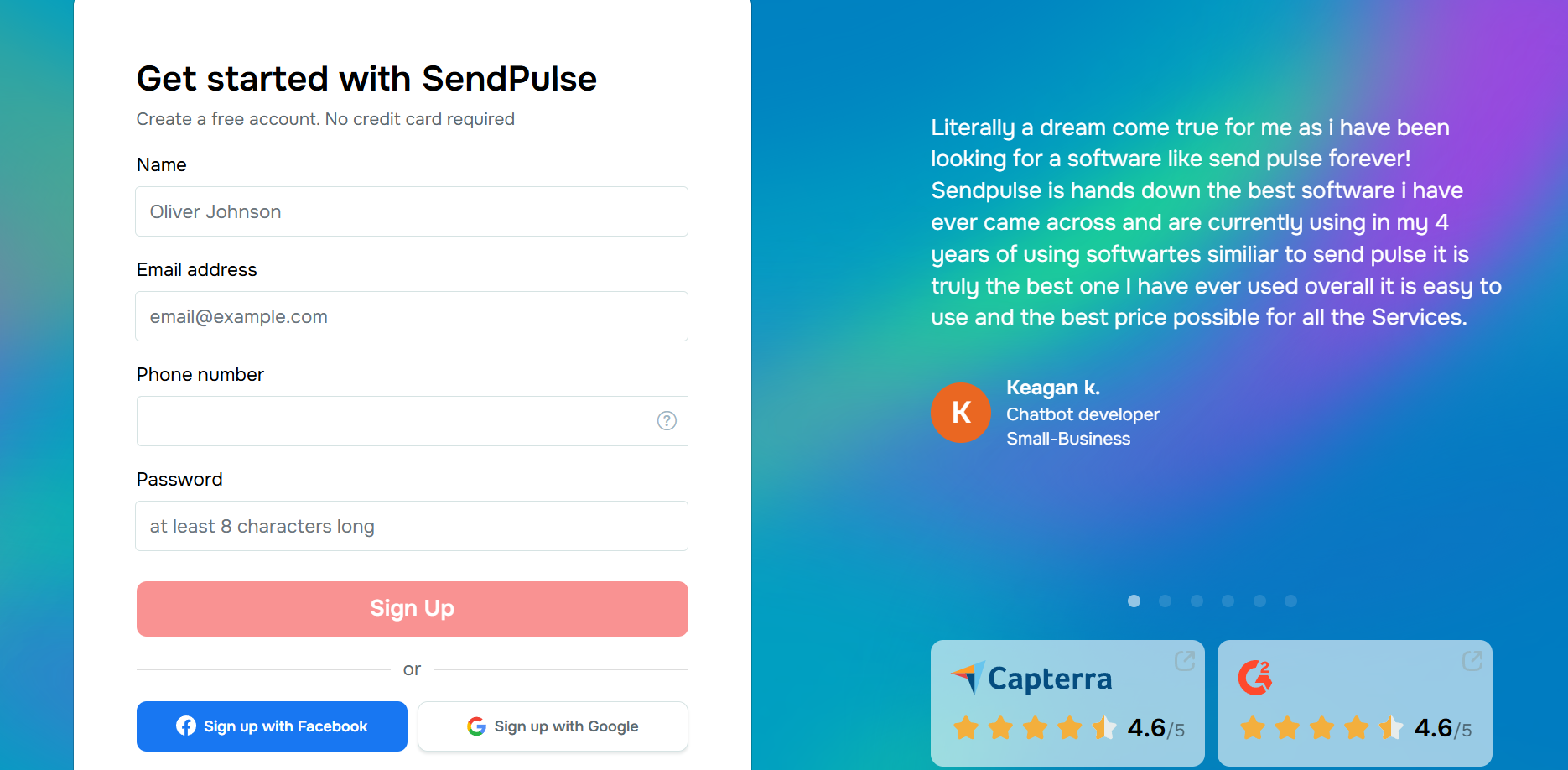
1. Register with SendPulse
Sign up with SendPulse by filling out the SMS service subscription form.
2. Create a contact list
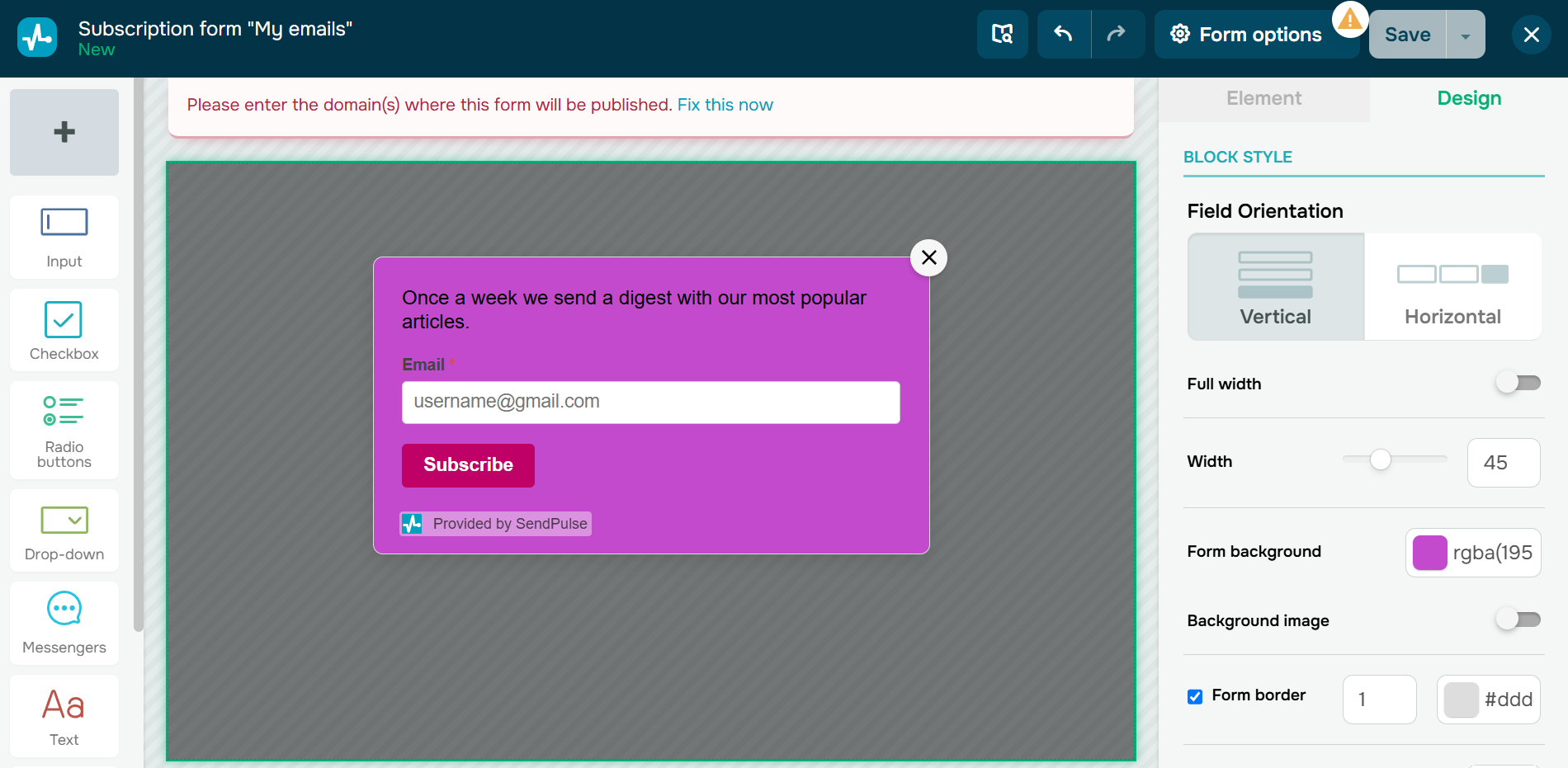
Add the phone numbers of recipients to whom you want to send a campaign. Use the SendPulse subscription form builder to grow your contact list for free. There are four types of forms available. Edit their style, fonts, and colors to fit your brand design. It takes up to 10 minutes to create an original subscription form.
3. Choose a sender ID
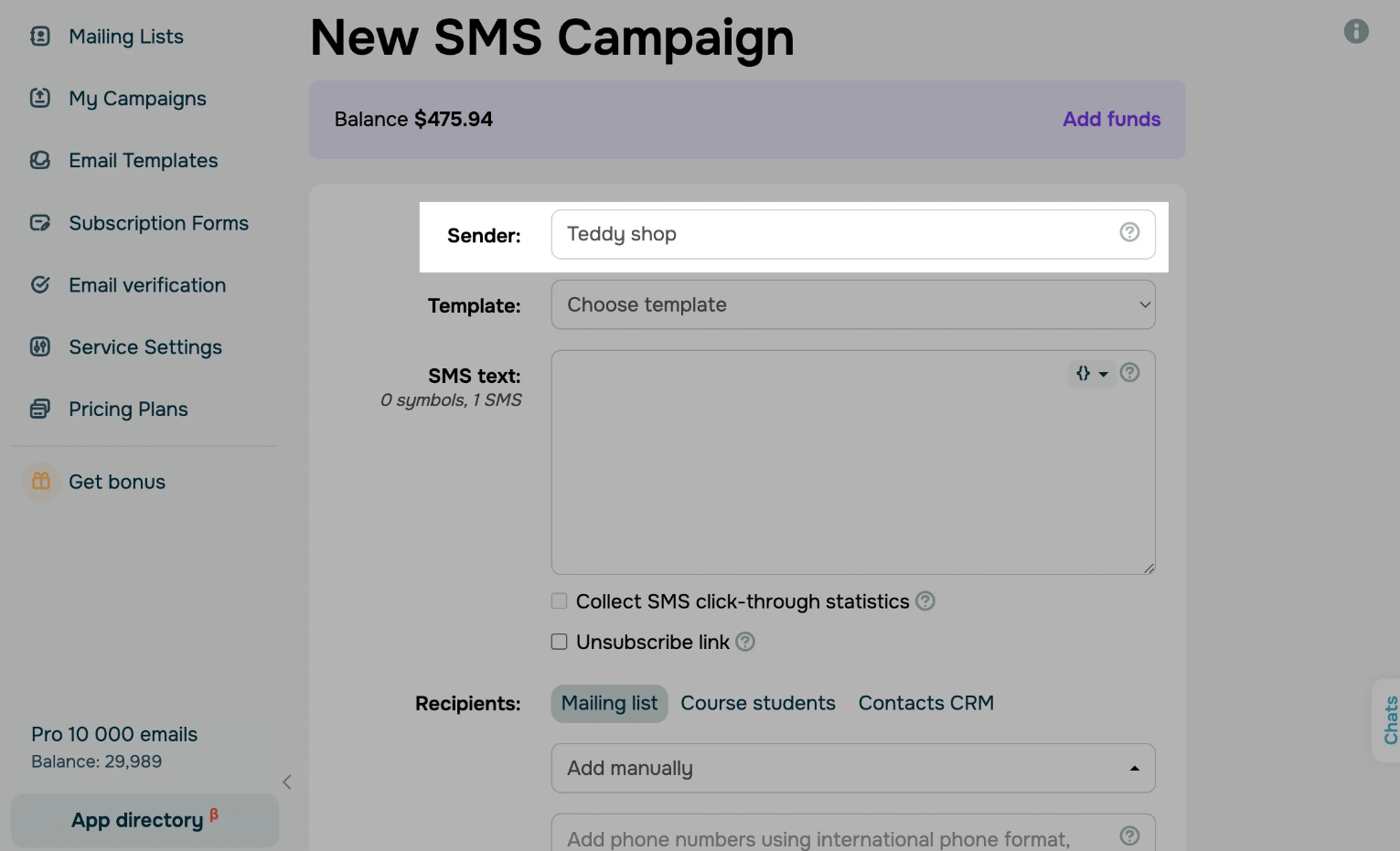
You need to select a sender ID depending on the country you are in to send SMS campaigns.
4. Add message content
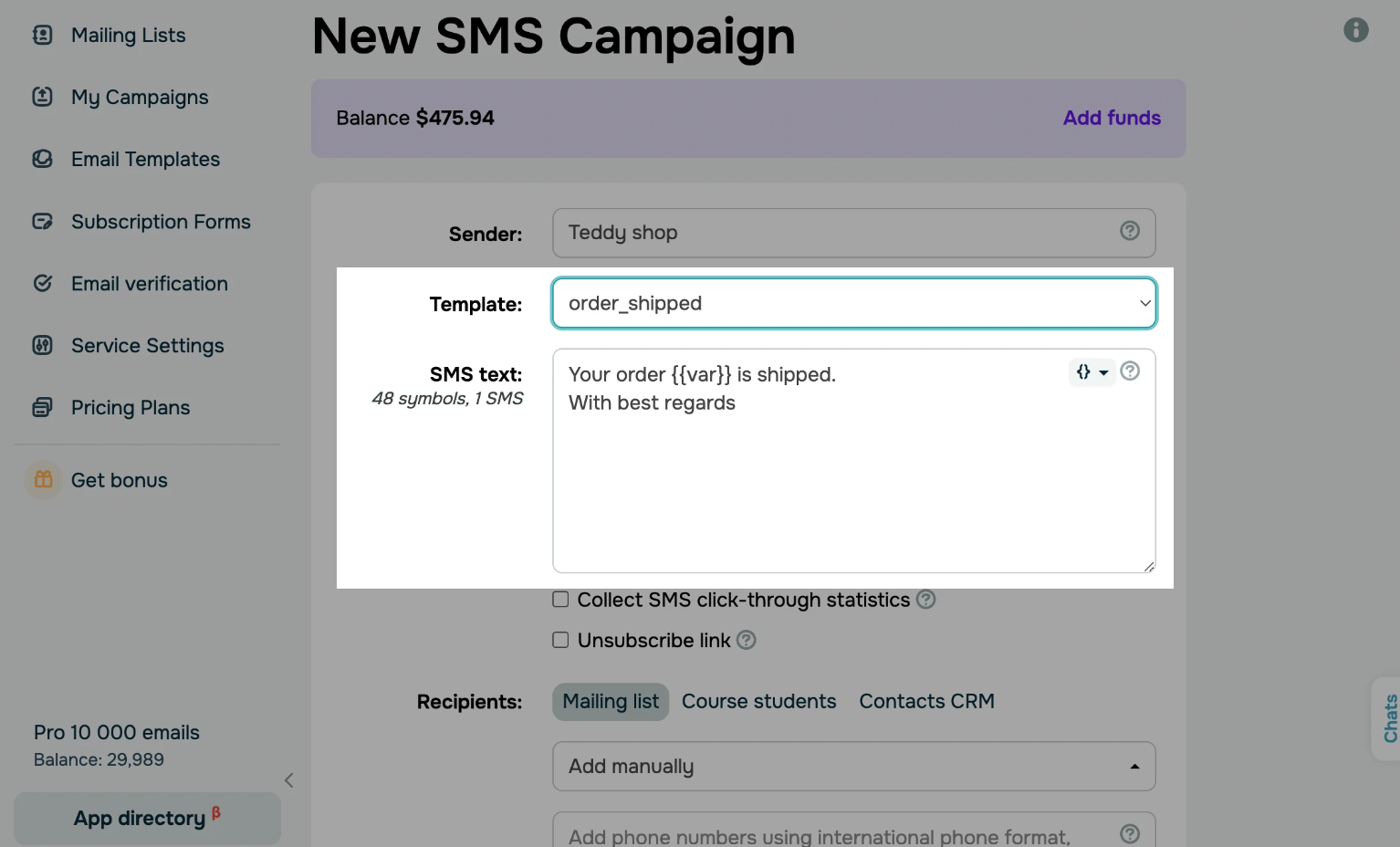
You can choose one of the pre-built templates or enter your own message text.
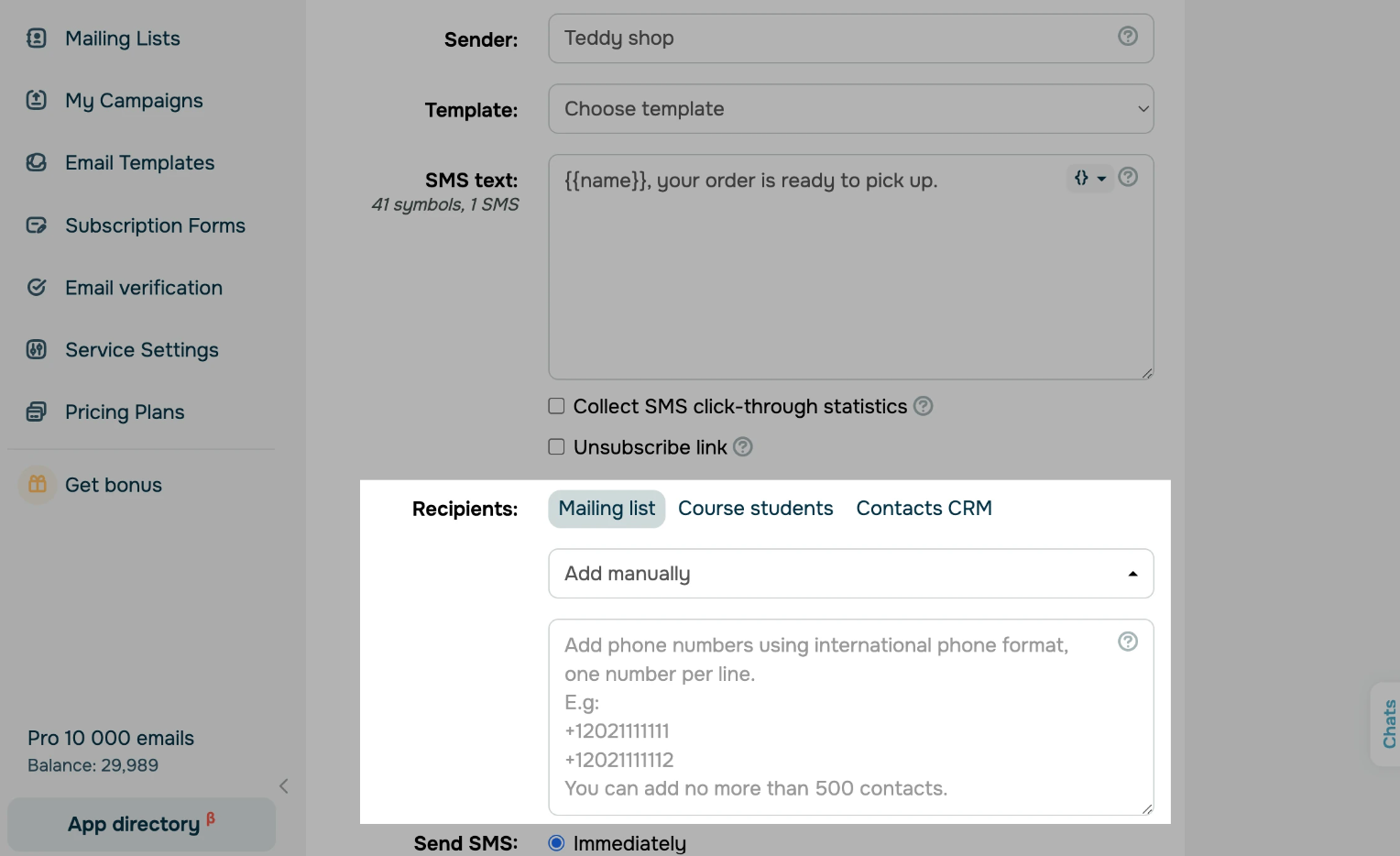
5. Select recipients
You can add recipients manually, from your mailing lists, students from your course, or CRM contacts.
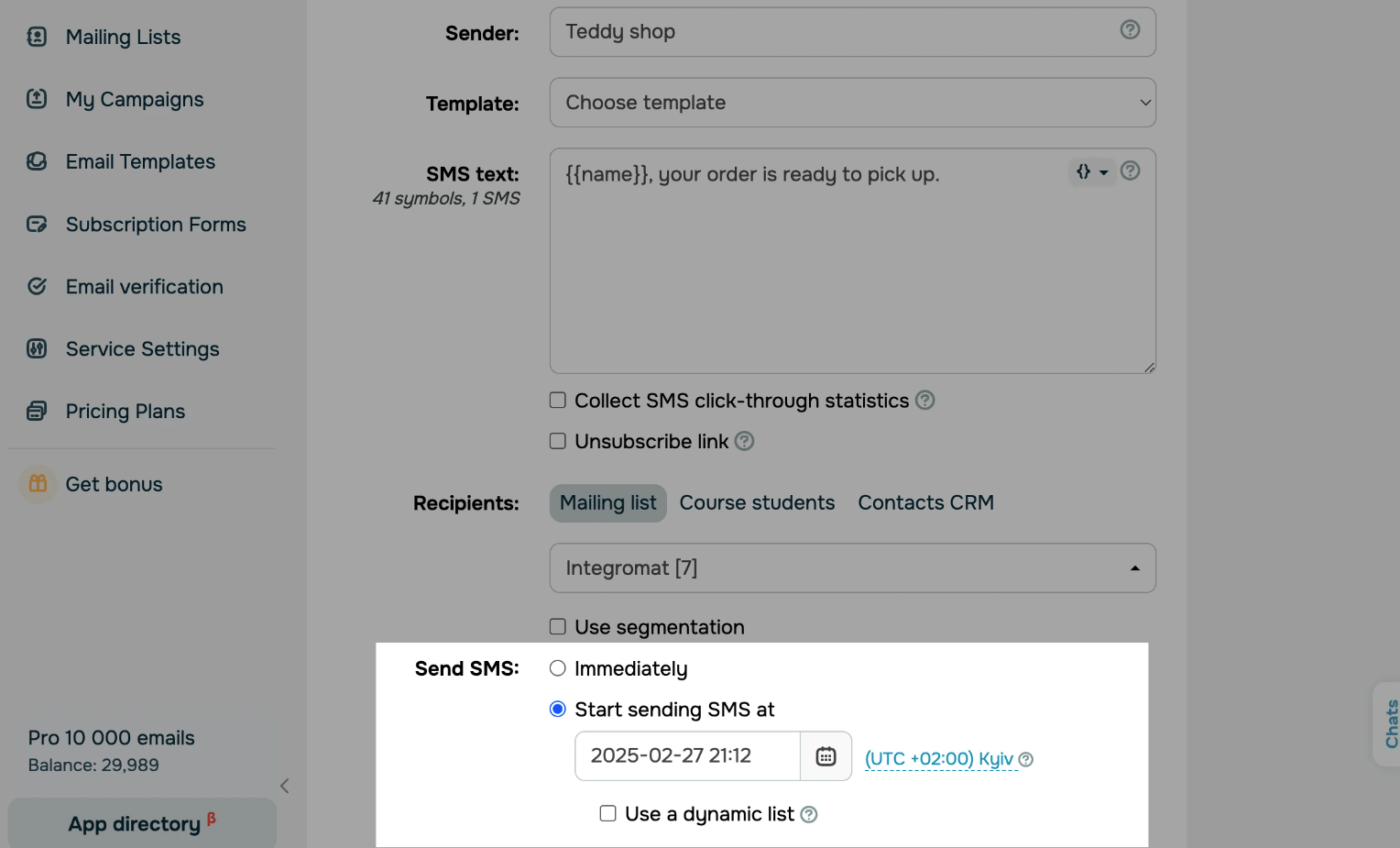
6. Choose the time to send
You can set up the date and time for delivering your SMS campaigns to recipients based on your timezone.
Now that you have a clear understanding of how to create an SMS campaign using SendPulse, let’s proceed to building a mobile marketing strategy. You’ll need this once you’re ready to implement mobile marketing in your business.
Mobile Marketing Strategy
Whether your goal is to increase brand visibility or boost customer engagement, a business marketing campaign should include mobile marketing knowledge. Over the years, several brands and companies have invested significantly in creating effective mobile marketing strategies that reach their target audience. Mobile marketing strategies utilize the following channels.
- SMS: a direct text message to a customer’s mobile phone that notifies them about the order or delivery status, top offers, and sales.
- Push notifications: appear as a pop-up message on apps or websites, even if a user was offline at the moment of sending. They are sent to inform about the recent articles on the blog, hot offers, and important updates. With SendPulse, sending push notifications is a completely free service if your database contains fewer than 10,000 subscribers.
- Email: today, most people open emails on their smartphones, so the importance of optimizing emails for mobile is increasing. With SendPulse, you can send email campaigns for free using professional marketing tools.
Now that you are familiar with mobile marketing strategy, it’s time to proceed to SMS use cases and examples.
SMS Use Cases and Examples
You can see that businesses across various industries actively utilize SMS for higher open and click-through rates, resulting in increased conversions. We’ll review the most popular ones, along with examples, so that you can gather some ideas. So let’s dive in.
Promotions and special offers
When you have time-sensitive offers, SMS is the most effective way to deliver information about them promptly. This is because people usually open SMS faster than emails, DMs on social media, and messages on messengers. Customers can instantly notice your messages and take the desired action as fast as possible before the offer expires.
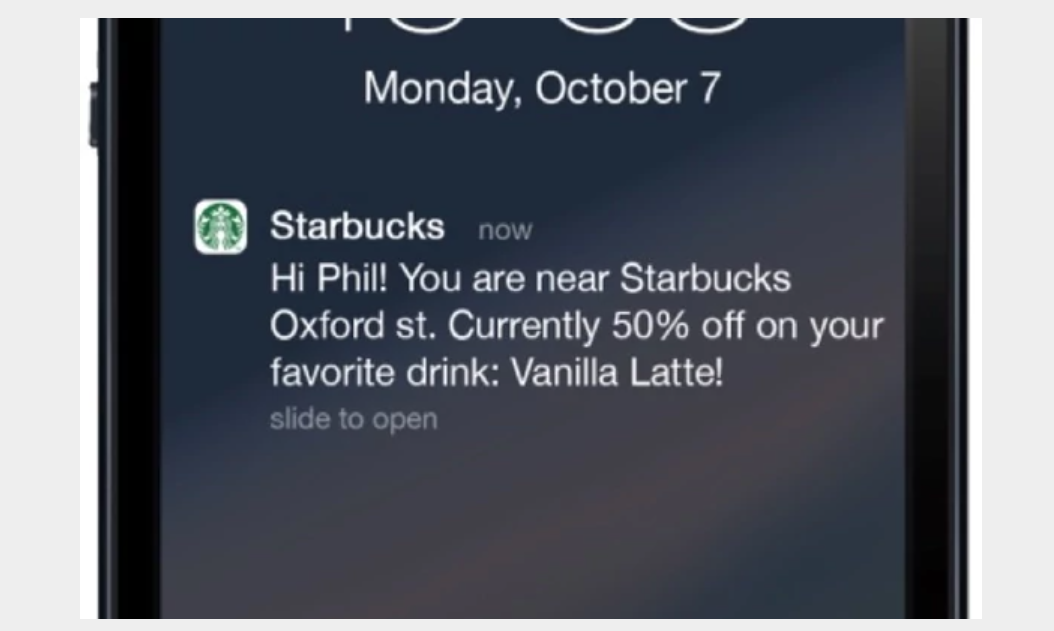
Below, you will find an example of such an SMS from Starbucks. The company offers customers a 50% discount on vanilla latte. Those interested in drinking this beverage will take advantage of the opportunity after reading the message.
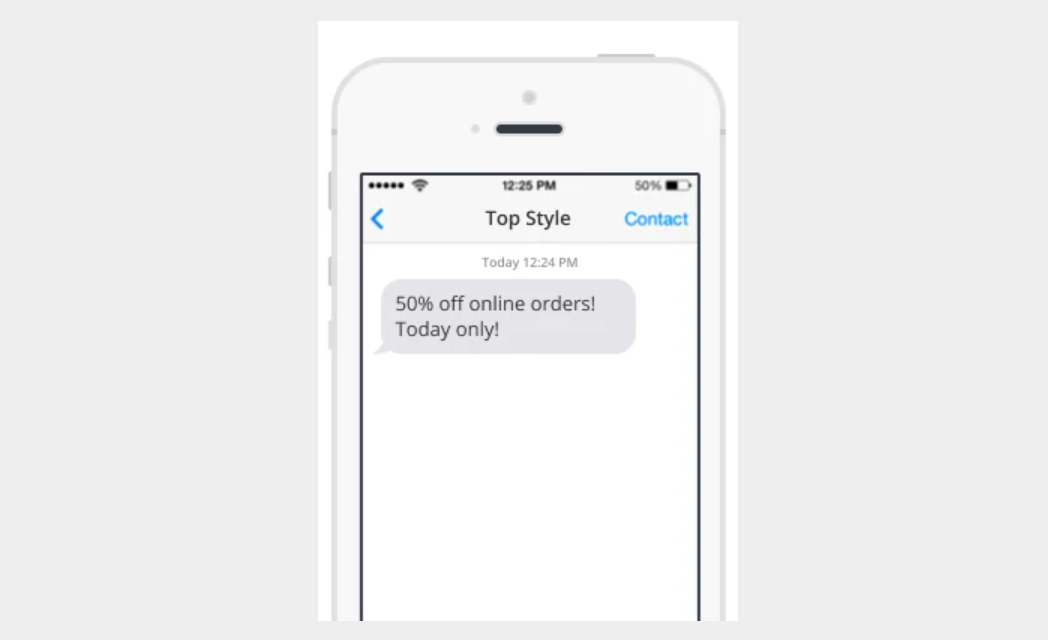
Another example illustrates how brands can capitalize on the fear of missing out by informing customers about time-limited offers via SMS. This is highly effective, as it encourages faster purchases without customers overthinking whether they need to buy a particular product.
Appointment reminders
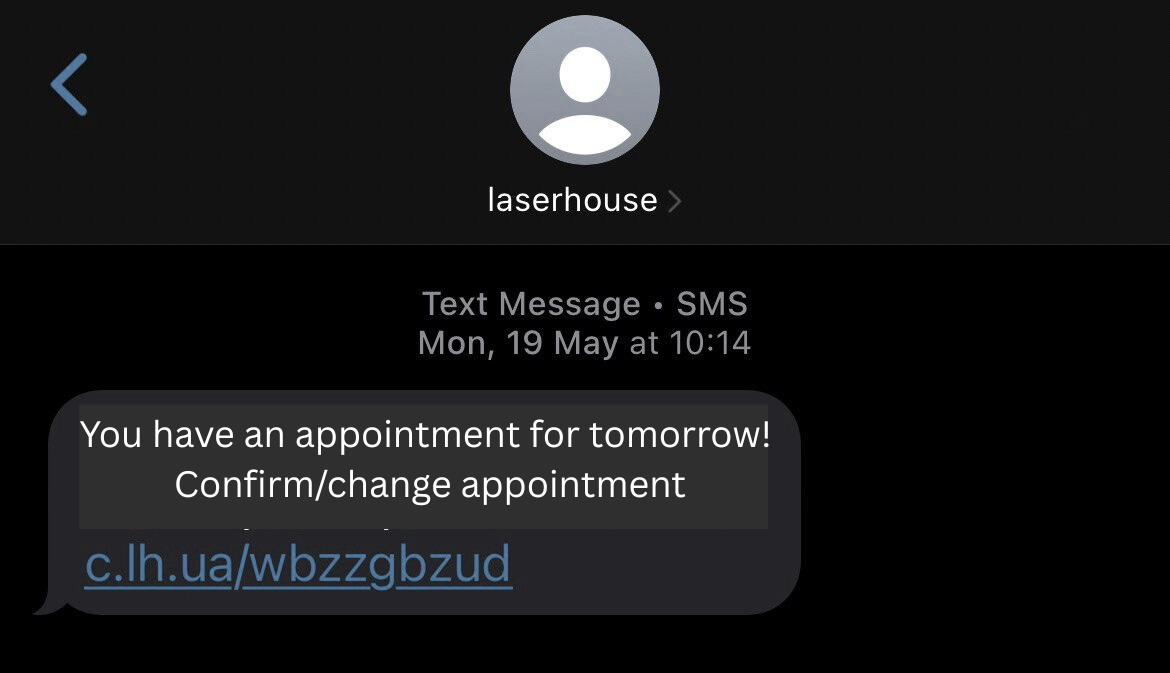
This type of SMS is designed to remind customers about upcoming appointments, events, and bookings, thereby preventing the possibility of no-shows. When you send such messages to clients, you can reduce the number of missed appointments.
Below, you can see how the company sends SMS reminders before appointments to ensure that clients arrive on the correct day and time.
Order and delivery updates
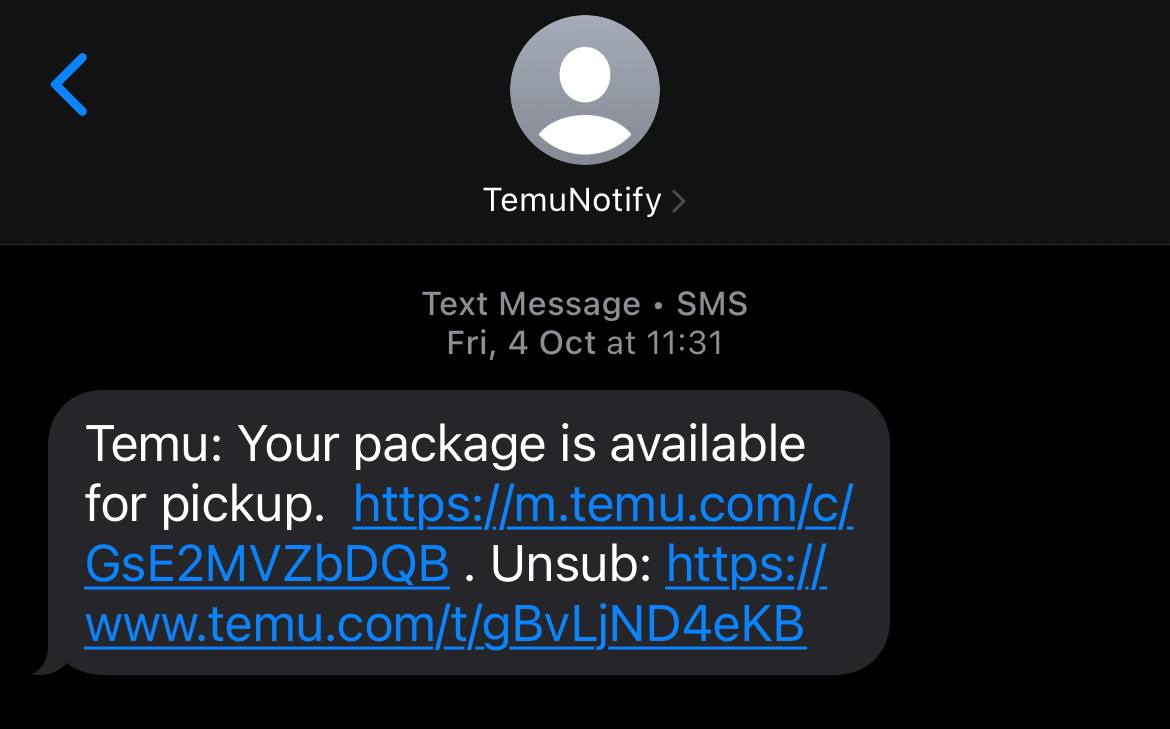
SMS is suitable for sending updates about orders and deliveries. You can send the accurate delivery date, and customers will instantly take this information into account without having to wonder when the products will arrive.
Below, you will find an example of Temu sending an SMS informing you about packages ready for pickup. Customers can follow the link to find out more details about the order and the pickup point.
Activation codes
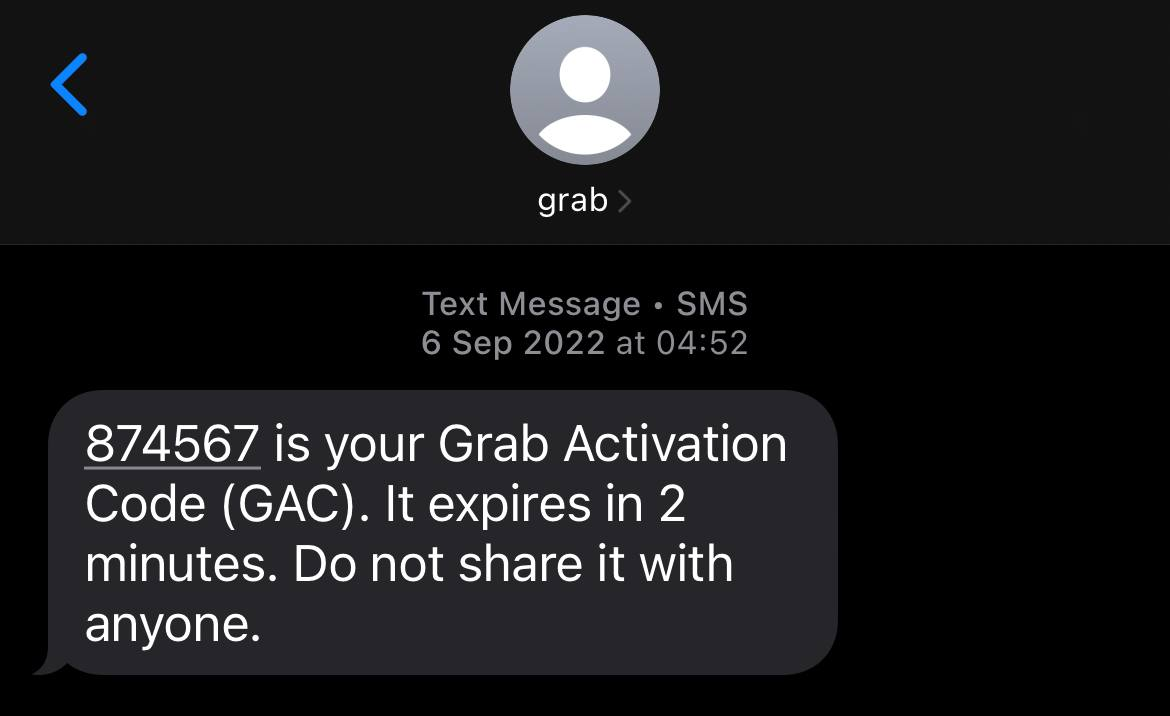
When customers activate their accounts, brands usually need to confirm their identities. The best way to do this is by sending SMS right to their smartphones. People will instantly see these messages and take the necessary action. Typically, these codes in SMS expire within minutes, so users must use them promptly.
Below, you will find an example of an activation SMS sent to customers by Grab.
Surveys
SMS is also useful for conducting surveys and collecting feedback from customers. It’s essential to gather customer insights after they complete a purchase with your brand. You can send such an SMS to customers a couple of weeks after they purchase your products and share a link for them to complete a survey or rate their experience with your company. This is crucial for receiving additional information for improving your product and letting clients know that you care.
Below, you can see how the UNIQA insurance company invites customers to rate their customer experience using a link in SMS.

Now that you have some inspiration from the examples, let’s grab some best practices. They will provide you with a hint on what needs to be done to maximize the effectiveness of your mobile marketing strategy.
11 Mobile Marketing Best Practices
- Send messages only after receiving user consent
- Always prioritize mobile-first design
- Make your interactions feel more personalized
- Take advantage of SMS and push notifications
- Ensure a seamless checkout experience on mobile devices
- Incorporate location-based marketing
- Use QR codes
- Leverage AI
- Include opt-out options
- Develop a mobile app
- Use chatbots for social media
What makes an excellent mobile marketing strategy? Here are some tips for creating an effective one.
- Send messages only after receiving user consent. Nowadays, cold SMS marketing isn’t a good idea because the majority of people aren’t happy with receiving information about products they have no idea about. So always ask for permission before delivering promotional SMS to your audience. This way, you’ll be able to comply with laws and regulations and ensure that customers expect updates from your brand. It’s the perfect way to maintain a positive sender reputation and keep your customers happy. This way, you also comply with the law and regulations that require brands to have customer consent and opt-out options.
- Always prioritize mobile-first design. When implementing mobile marketing, the first thing to consider is your site navigation. It needs to be user-friendly, intuitive, and fast when used on various devices, including smartphones, tablets, laptops, and PCs. Speed is crucial for users exploring your products, clicking on buttons, and checking out items. Therefore, always test your website's load time and optimize it if needed. Additionally, your call-to-action buttons should be large, bold, and easy to tap, allowing users to complete the desired action.
- Make your interactions feel more personalized. To make your email, SMS, and push notifications more relevant, consider using customer data. Information about their location, behavior, and preferences will help you tailor content based on your customers’ needs and increase the chances of a conversion. When messages are personalized, you are more likely to get higher open and click-through rates.
- Take advantage of SMS and push notifications. SMS is an excellent channel for direct communication with customers because it has high open rates. Unlike emails, SMS are easier to notice, so more people will explore your offers. They are perfect for informing about upcoming events, sales, promotions, and special offers. You can also take advantage of push notifications to receive updates, reminders, and special offers. However, when sending SMS and push notifications, always adhere to a schedule and avoid delivering promotional messages too frequently, as this may result in opt-outs.
- Ensure a seamless checkout experience on mobile devices. Since it’s harder to check out on small screens, you should make this process as simple and frictionless as possible. Add autofill to your forms and reduce the number of fields to the most crucial ones. Payment options like Apple Pay, Google Pay, and PayPal will significantly simplify the process, allowing customers to complete transactions more quickly.
- Incorporate location-based marketing. By utilizing customers’ geographic locations, you can deliver personalized offers at the right time and place. While using technologies like GPS, Wi-Fi, Bluetooth beacons, and geofencing, you’ll be able to reach people nearby and offer them your products or services. It helps you communicate with nearby customers and deliver relevant messages, resulting in higher conversions.
- Use QR codes. QR codes are an easy and convenient way to access your product. You can provide QR codes for customers to explore your menu and pricing, share reviews, and learn about your brand from print ads. With QR codes, your clients can take advantage of contactless payment. They also assist in promoting your products by placing QR codes on cars, billboards, public transportation, and other relevant locations.
- Leverage AI. Utilizing AI-powered systems enables you to significantly enhance customer communication by automating processes and refining your promotional content. It enables you to personalize your messages and use the right words to effectively reach your target audience across various channels, including SMS, social media, email, and more.
- Include opt-out options. You should always include opt-out buttons in your messages, in case customers want to unsubscribe from your campaigns if they are no longer interested. Allowing customers to opt out is the best way to avoid spam complaints and maintain a good sender reputation.
- Develop a mobile app. If customers usually access your products using their smartphones, there’s a point in creating a special app. It will provide users with more convenience in ordering your products, using your services, or checking out items. Customers won’t face issues with navigation, loading times, or a complicated checkout process.
- Use chatbots for social media. If you actively communicate with your audience using social media platforms, consider adding chatbots to the preferred channels. With their help, you’ll be able to respond to users’ chats instantly regardless of their time zones. If you want to add chatbots to Instagram, Facebook, WhatsApp, or Telegram, we recommend using SendPulse, which is intuitive and easy to use, regardless of your experience.
Congrats, now you know what mobile marketing is all about and how it helps your company. With the right strategy and tools, you can effectively interact with your target audience and achieve your business goals more quickly.
or