









Trusted by 200,000 customers. Loved by 6K+ reviewers

ufs rocher dominos jooble viessmann puma samsung lot swatch karcher PWC radisson tata jackwolfskin sofitel

Use your chatbot as far as it can go

Set your conversational AI chatbot to handle off-script questions, voice messages, and conversations across languages. When human judgment matters, your team takes it from there.

Answer the question no script accounted for

Answer the question no script accounted for

Any chatbot can stick to a script. But when a customer shows up with something unexpected and gets a canned reply back, their trust can take a hit.

Your conversational AI chatbot builds relevant answers from previous messages and your approved sources. You can also have it stick to the information you share, so when it doesn't have an answer, it says so instead of making something up.

With this in place, your chatbot can take more off your team’s plate and give them room for the conversations that truly need them.

Cover the hours and traffic spikes you can’t staff

Cover the hours and traffic spikes you can’t staff

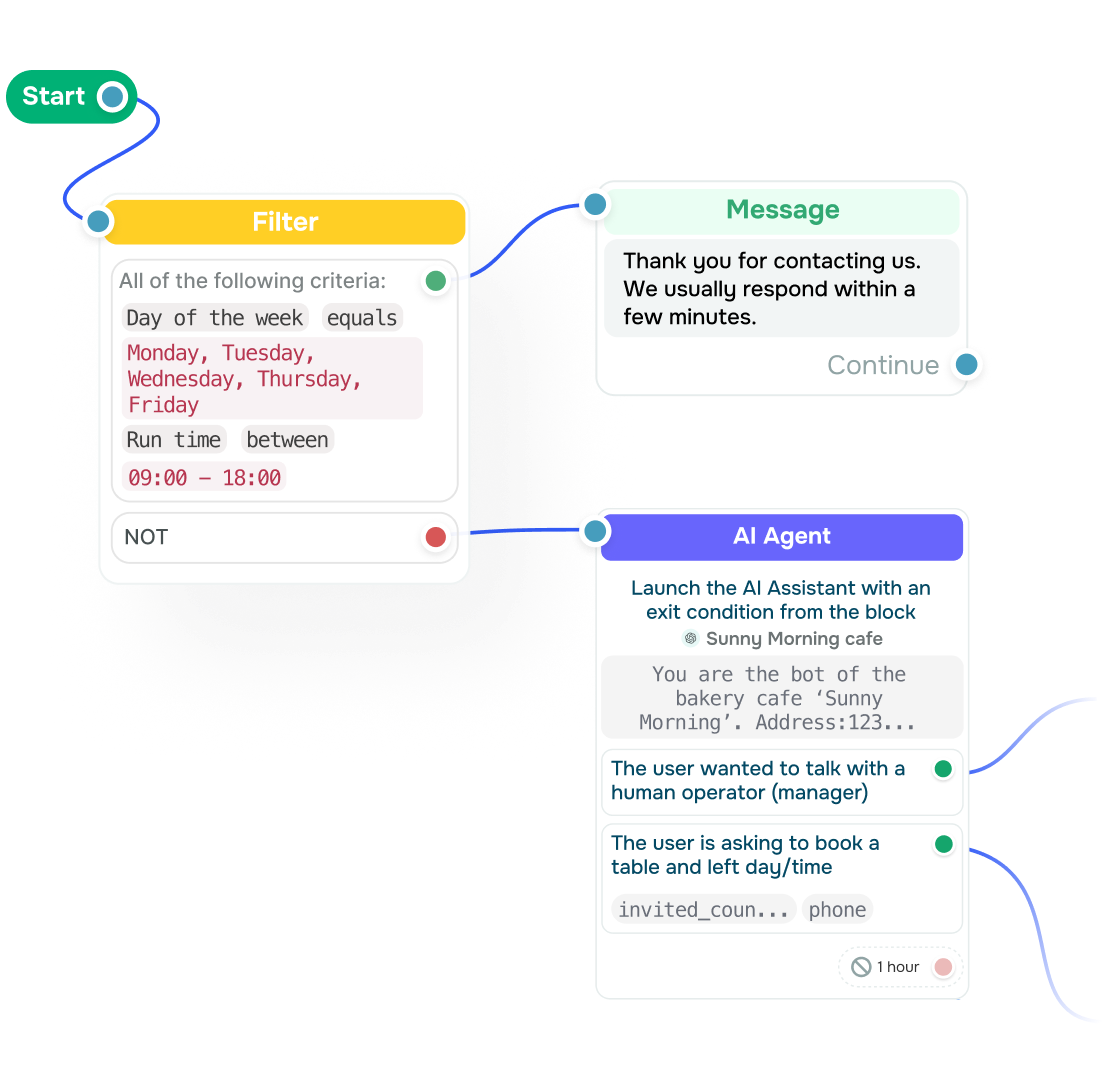
Customer messages don’t always arrive on your schedule. Some come in after hours. Others pile up faster than your team can reply. Either way, customers are left waiting, and that delay can cost you the conversation.

You don’t need to add more shifts just to keep up. Your chatbot picks up messages after hours and handles spikes in demand without making customers wait.

Whether five people reach out to you at once or a campaign brings in hundreds of messages, each customer gets a prompt reply.

That means you don’t have to staff up to keep the customer experience consistent around the clock.

Speak your customer's language, even when you don't

Speak your customer's language, even when you don't

If your customers are spread across the globe, you're probably already holding conversations in more languages than your team speaks.

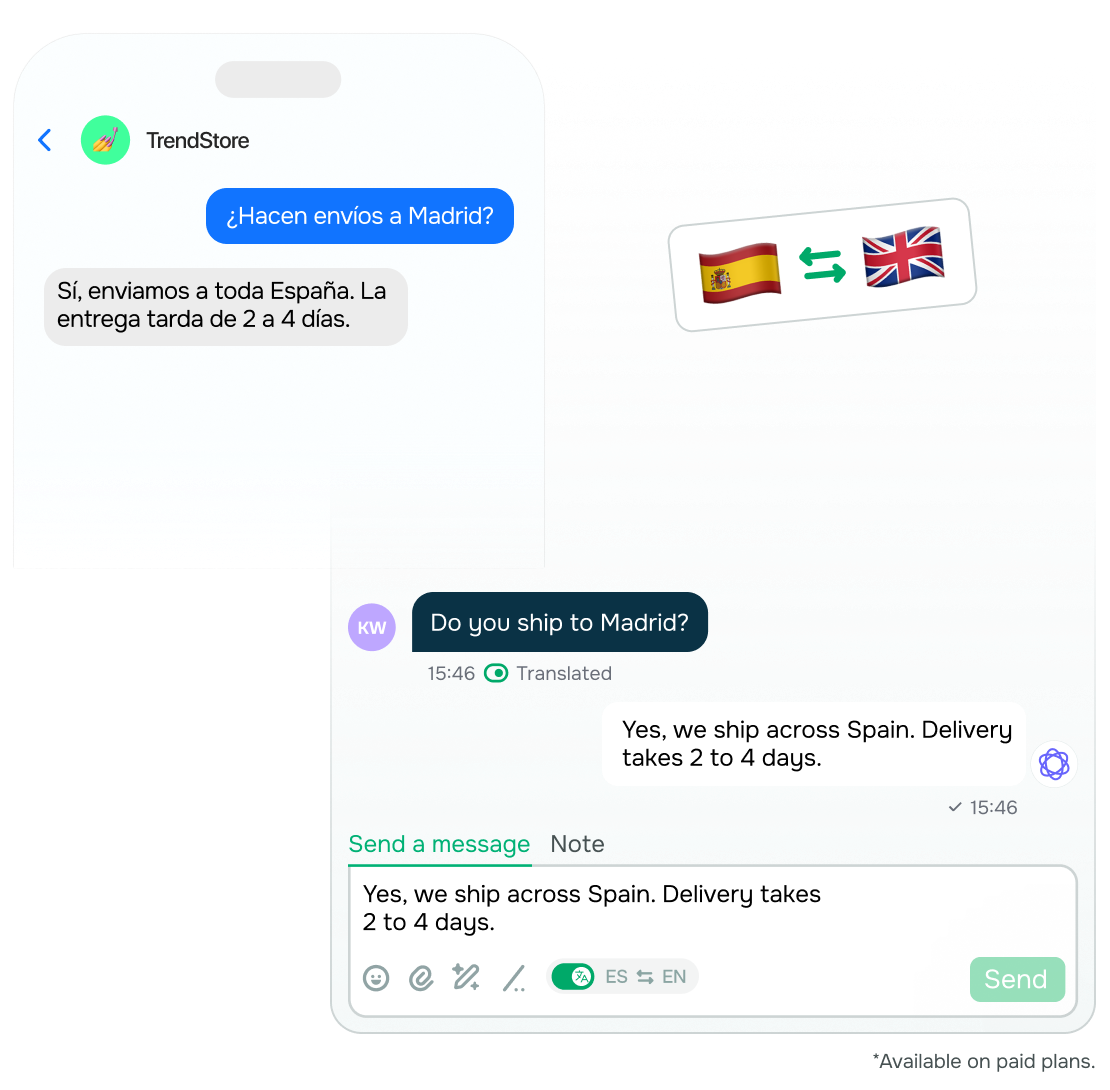
Let your conversational AI chatbot translate incoming messages into your agent's working language, and reply to customers in their preferred one.

What follows is simple: customers and agents both read and write in their own language, and you can expand into a new region before hiring a local team.

Reply to a voice message as fast as a typed one

Reply to a voice message as fast as a typed one

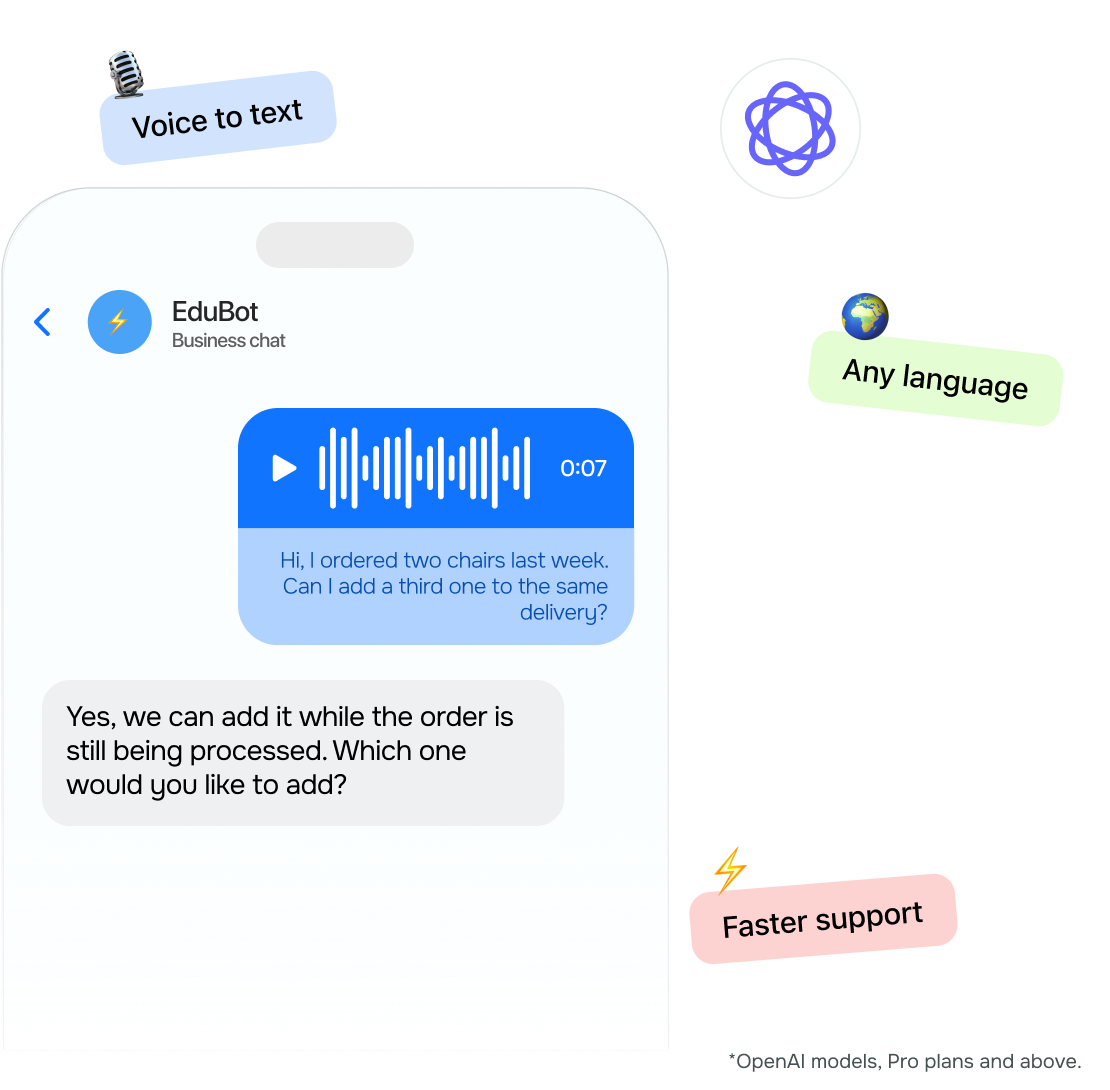
Customers send voice messages almost as often as they type. A classic chatbot can't do anything with that, since it only reads text. This means that voice messages go to an agent, who has to spend time listening to every single one. And once chat volume climbs, that flow breaks down fast.

A conversational AI chatbot solves this by converting voice messages into text automatically. From there, it replies exactly the way it would to a typed question. Any voice message you get joins the same flow as the rest of your conversations, at the same speed.

Keep the highest-stakes conversations with a person

Keep the highest-stakes conversations with a person

A refund dispute or an already-frustrated customer needs a person's judgment, and no AI model can handle that properly.

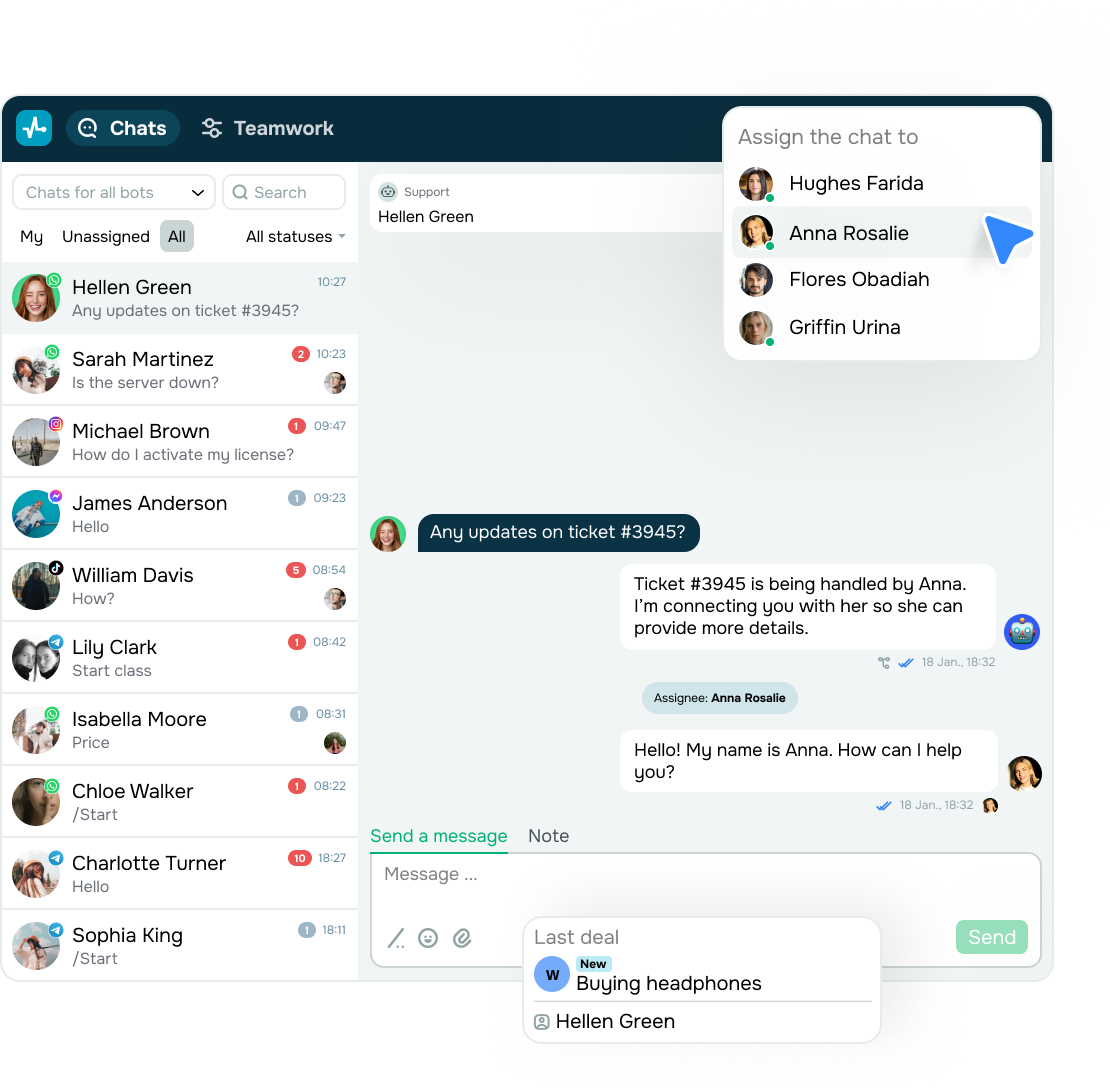
That’s why your agent can jump into any chat, take it over, and hand it back to your chatbot once the issue is resolved. Each chat goes to the team assigned to handle it, so the right person picks up the conversation every time.

This way, people step in exactly where it matters, while routine conversations stay automated.

app

Jump into any chat on the go

Take control of any interaction on your own terms, right from your phone. Your chatbot takes it from there once you're done.

Learning hub

See where a conversational AI chatbot fits best, and when a human touch matters more.
What is a conversational AI chatbot?

What is a conversational AI chatbot?

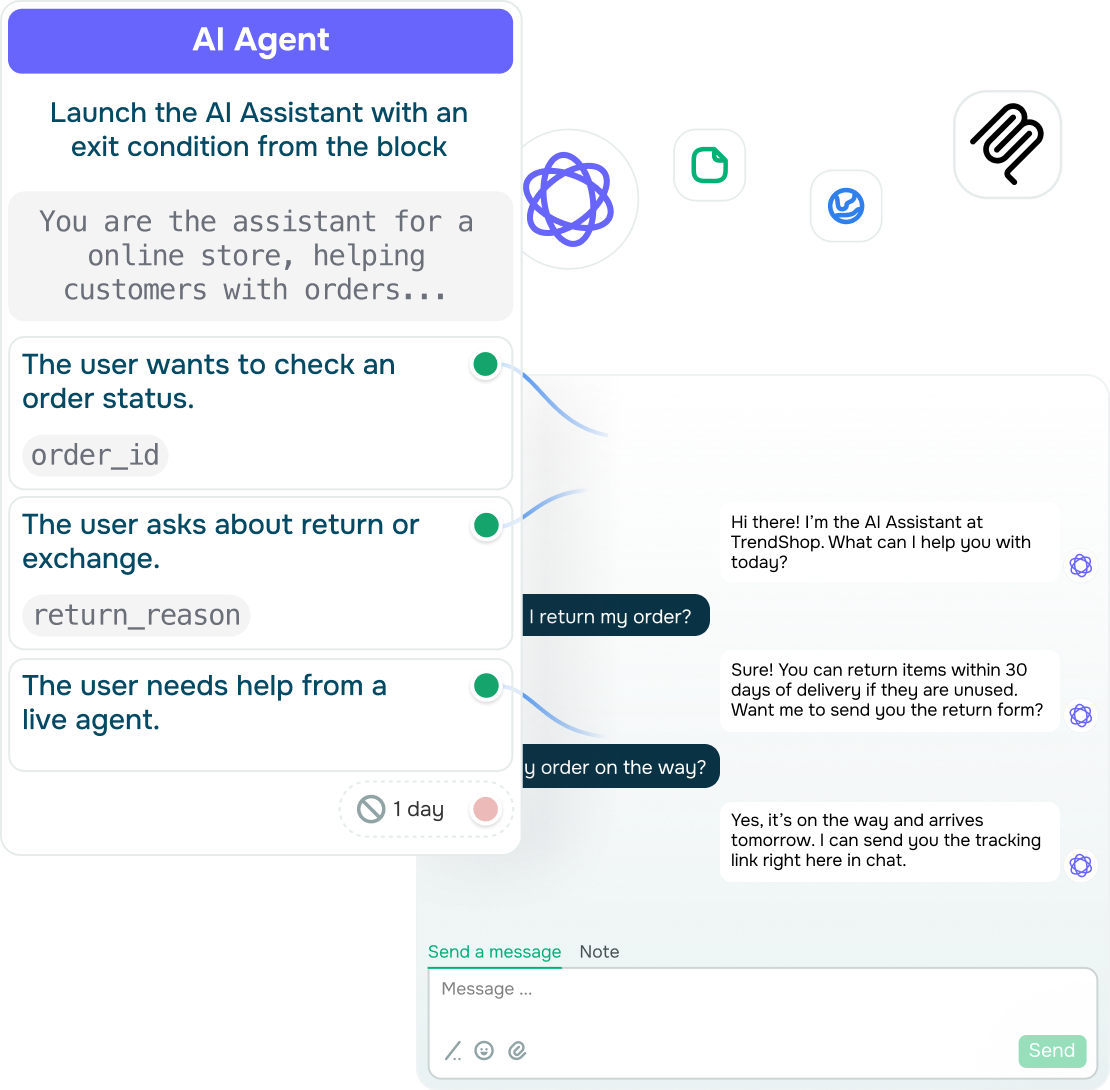
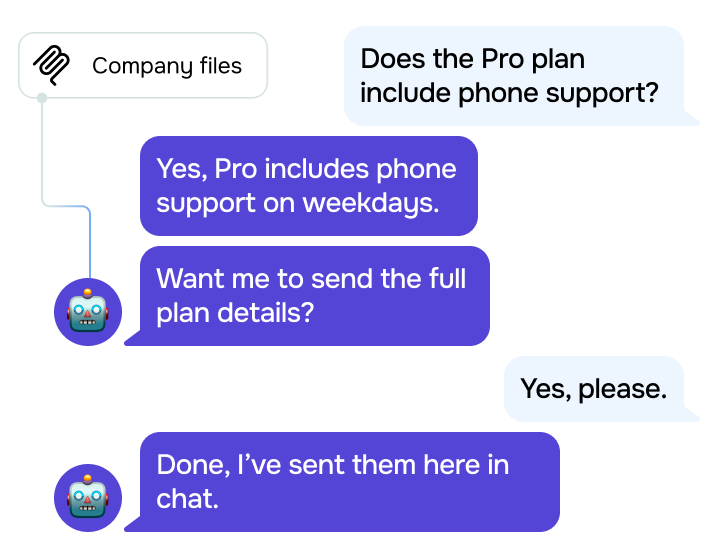
A conversational AI chatbot uses an LLM to understand what a customer wrote and generate a context-aware reply.

It can handle non-scripted questions, follow conversation history, and pull answers from the files you've uploaded to it. A chatbot you build using SendPulse works through an AI agent added to a regular chatbot flow.

This means that AI-driven and scripted conversations live in the same chatbot.
Which interactions work best with conversational AI?

Which interactions work best with conversational AI?

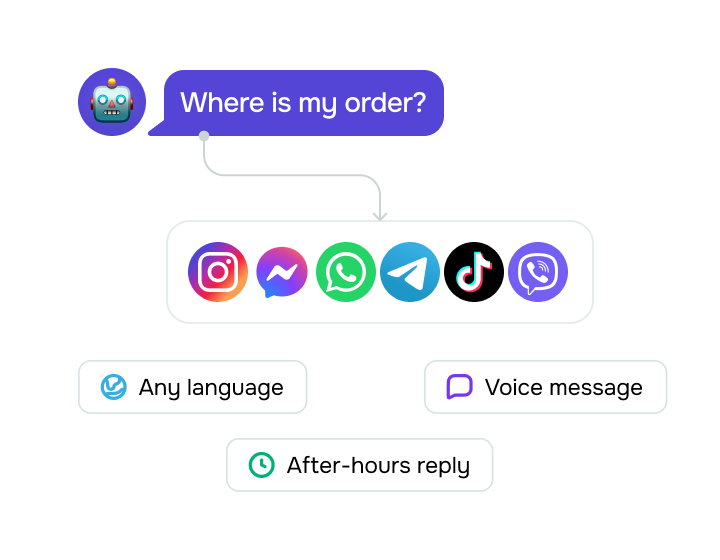
If the answer already exists in your uploaded files, a conversational AI chatbot is a strong fit. It can find the relevant information and reply in context, without involving your team.

That's especially useful when customers reach out outside working hours, message in another language, or send voice messages.

By taking on routine interactions, a chatbot can lighten your agents’ workload and give customers fast, consistent support 24/7.
When should your team take over?

When should your team take over?

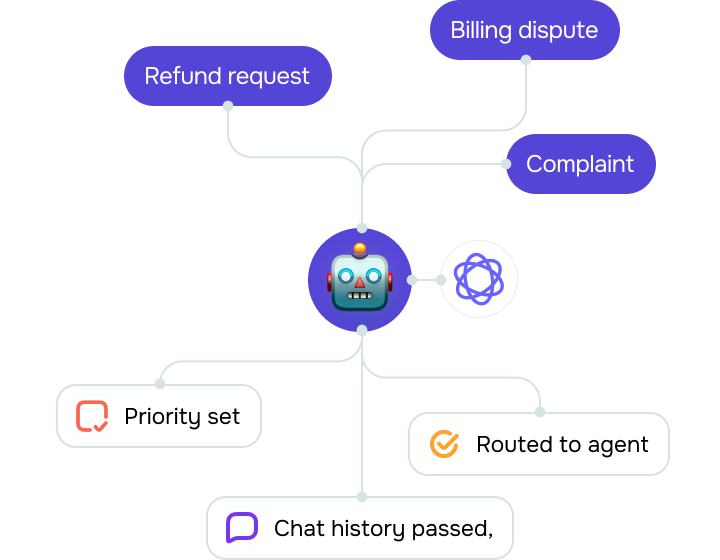
Not every customer conversation belongs with a chatbot. Before you launch, decide which messages it can handle and which need a human.

Complaints, refunds, billing disputes, contract issues, high-value negotiations, and conversations with frustrated customers should go straight to a human agent. In moments like these, a wrong answer can cost far more than the time your conversational AI chatbot saves.
How do I know if my conversational AI chatbot handles interactions well?

How do I know if my conversational AI chatbot handles interactions well?

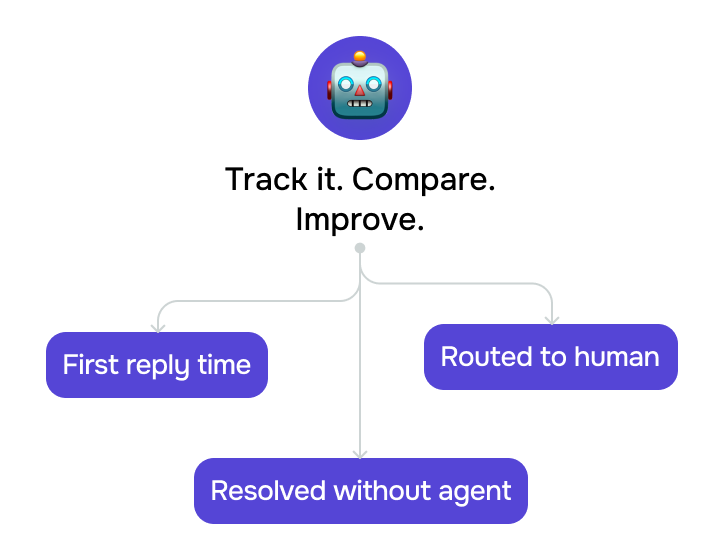
Pick one conversation type and track it for a few weeks. Compare what you find with how your team handled similar conversations before. Look at how many interactions were resolved without an agent, how long customers waited for a first reply, and how often a chat had to be routed to a human.

Go through the conversation history, too. The numbers show you the volume, but the history tells you how good the replies actually were.

Automate conversations without losing control

Free your team from routine chats, so they stay informed and ready to step in when it matters.

icon
Handle peak demand

However many chats come in, your team size won't hold you back.

icon
Use your knowledge

Your chatbot finds relevant info in your files and uses it to reply to customers.

icon
Give agents control

Agents can jump into any chat and hand it back to your chatbot once they’re done.

icon
Stay aligned

Your chatbot and agents both see the same contact profiles and chat history.

icon
Track performance

Conversation stats and reply times sit next to your team’s numbers.

icon
Bring chats together

Conversations handled by AI or an agent arrive in the same workspace, across every messaging app.

FAQ

Start with conversations where the alternative is silence: messages that arrive at night, on weekends, or during traffic spikes. Here, automation gives customers an answer where they would otherwise have to wait. Once it works, see what other conversations would benefit from automation.

When your chatbot can't answer a question, you can set it to say so upfront. For conversations that need a person, set handoff rules so that they go straight to your team. This helps prevent made-up answers and keeps sensitive or complex inquiries with a human.

Yes. Your conversational chatbot can hold conversations in different languages, which helps your team support more customers without speaking every language themselves.

Look for a platform that lets you choose which conversations to automate, add your own knowledge sources, and hand complex interactions to your team. The right setup should give you control over where automation starts and where human agents take over.

Put routine conversations on autopilot

Choose what your chatbot should handle, set the rules, and give your team more time for conversations that need them.