If you like things a little extra, you’ll enjoy our WhatsApp formatting tricks that can turn any boring chunk of text into a captivating, nicely structured message. This guide covers everything documented in the official WhatsApp Help Center — plus shortcuts, workarounds, and extra tricks you won’t find there. By the end, you’ll know which formatting options can help you catch and direct your recipients’ attention, highlight certain words, and make your messages look more nuanced and memorable.
TL;DR WhatsApp text formatting cheat sheet
WhatsApp text formatting lets you apply styles like bold, italic, strikethrough, and more to your messages using special characters, shortcuts, or third-party tools.
Here’s a quick reference for all WhatsApp formatting syntax — the special characters you need for each style. For shortcuts and other methods, see the sections below.
| Style |
Syntax |
Best used for |
| Bold |
*your text* |
Emphasize key words or headings |
| Italic |
_your text_ |
Add subtle emphasis, cite foreign words |
| Strikethrough |
~your text~ |
Show corrections, outdated info |
| Monospace |
```your text``` |
Share code snippets, stand out visually |
| Inline code |
`your text` |
Highlight commands, short code references |
| Block quote |
> text (new line) |
Quote or highlight a block of text |
| Bulleted list |
- item or * item |
Organize unordered items |
| Numbered list |
1. item |
Create step-by-step sequences |

Power up your business with smart tools
From solo creators to global brands, thousands of customers trust SendPulse to run email campaigns, chatbots, automations, and more — all in one place.
Get started for free
How to format text in WhatsApp
There are multiple ways to change the look of your text in WhatsApp — here’s a glimpse of what’s possible:
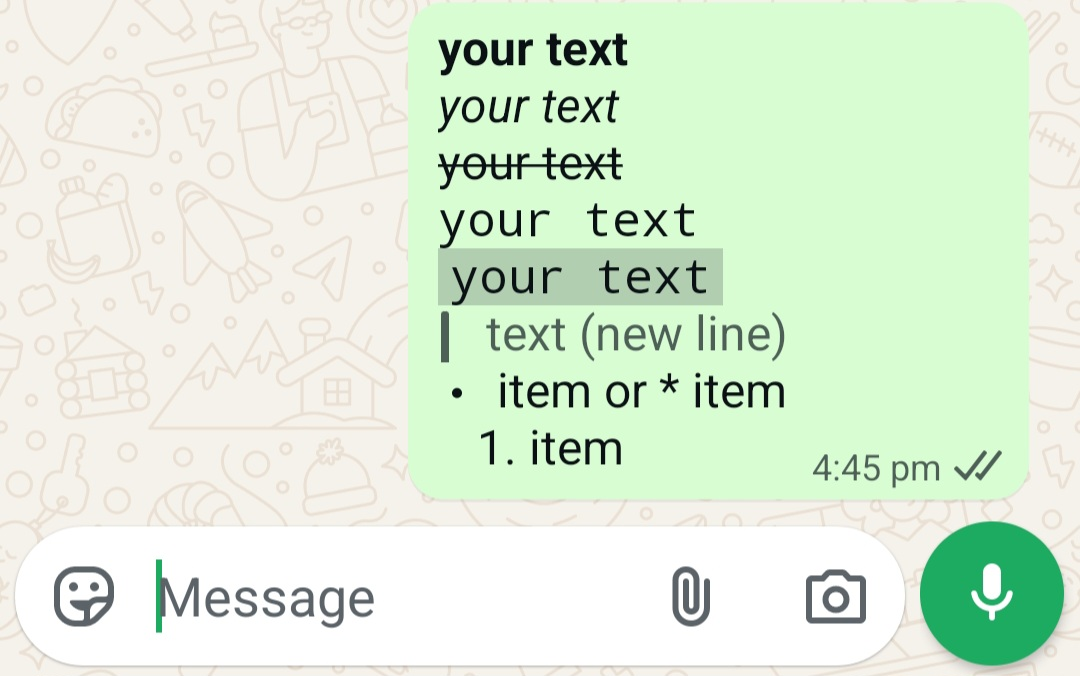 Basic WhatsApp text formatting options
You can apply any of the following styles to your messages:
- bold;
- italic;
- strikethrough;
- monospace;
- inline code;
- block quotes;
- bulleted and numbered lists.
Each of these is covered in detail in the sections below. But first, here’s a look at the three methods you can use to apply formatting in WhatsApp.
Special characters
The most common way to format text in WhatsApp is to wrap it in special characters. For example, use asterisks for bold, underscores for italics, tildes for strikethrough, and so on. This method works the same on Android, iOS, WhatsApp Web, and WhatsApp Desktop.
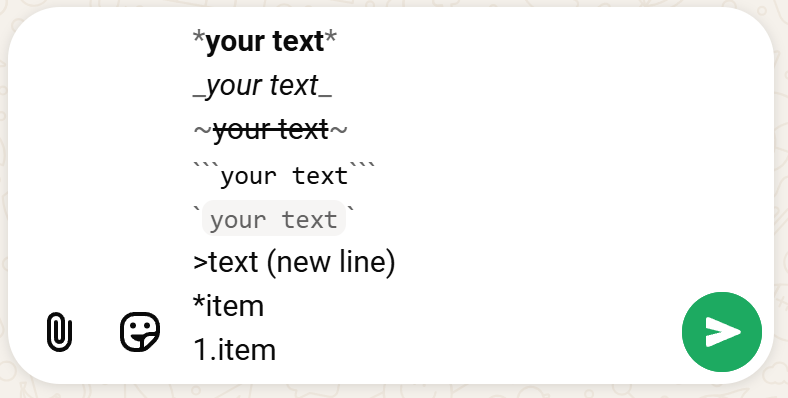 Using special characters for WhatsApp text formatting
You’ll find the exact syntax for each style in the dedicated sections below.
WhatsApp shortcuts
Adding all those extra symbols to your text can be tricky, there’s no denying that. But, for simple edits, you can take advantage of WhatsApp’s built-in shortcuts, which make writing in bold or italics so much easier.
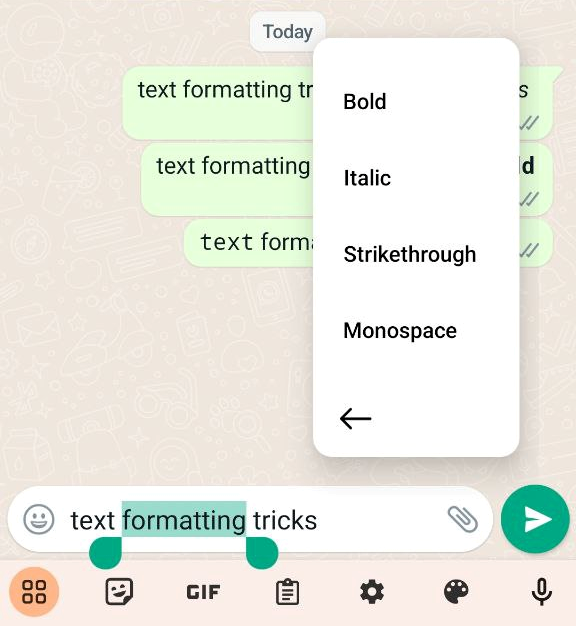 Using WhatsApp shortcuts to format text
Simply type your message, select the part of text you want to format, click the three-dot icon, and a few editing options will appear. This is the fastest way to write bold or italic in WhatsApp and use other formatting options like strikethrough or monospace.
Emoji keyboard tools for text formatting in WhatsApp
This is a less obvious but no less intuitive method of WhatsApp text formatting, and it’s great for those who need to use creative fonts regularly. Some Emoji keyboards, which usually come pre-installed on Android and iOS, have a surprising number of built-in formatting tools and text styles.
Typically, you can access the settings panel with one click and find lots of useful settings, including languages, themes, and font styles. It’s usually possible to customize the said panel, too.
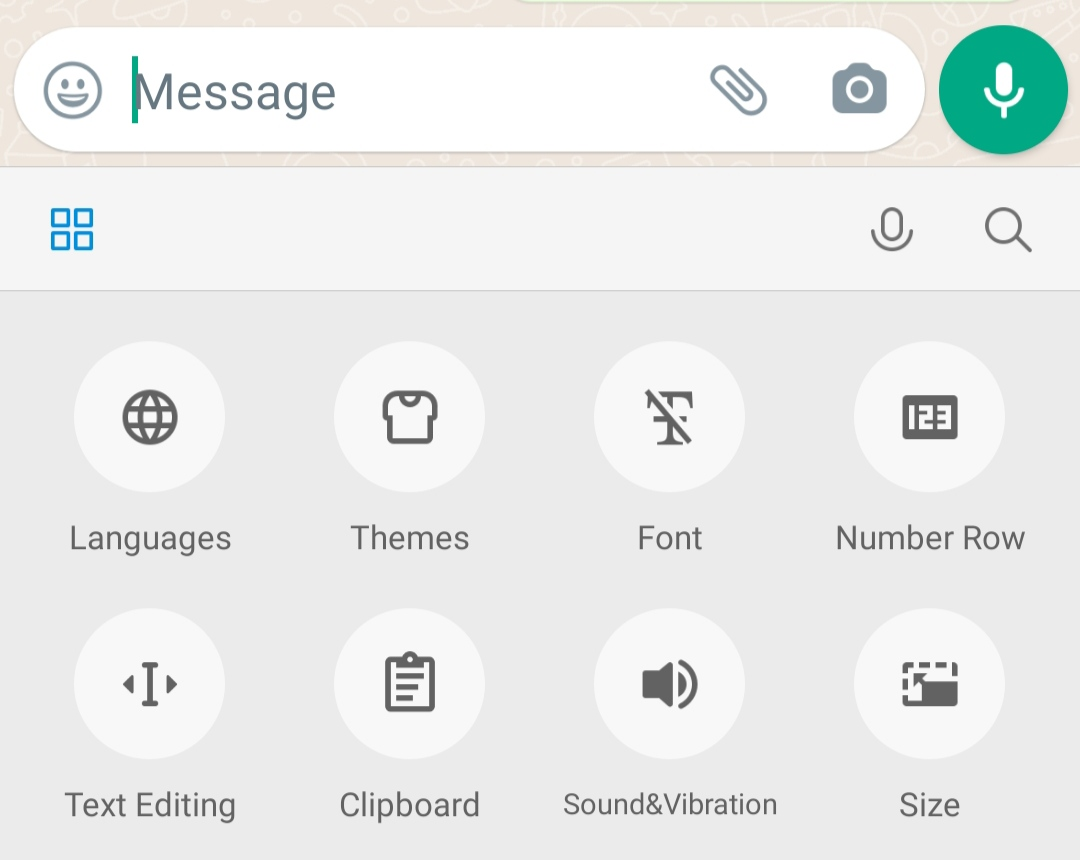 The settings panel of an Emoji keyboard
For example, with this Android Emoji keyboard, all you need to do is click “Font” to get a variety of cool WhatsApp font styles under your text field. Tap the style you like and type your message as usual — everything you enter will be stylized accordingly.
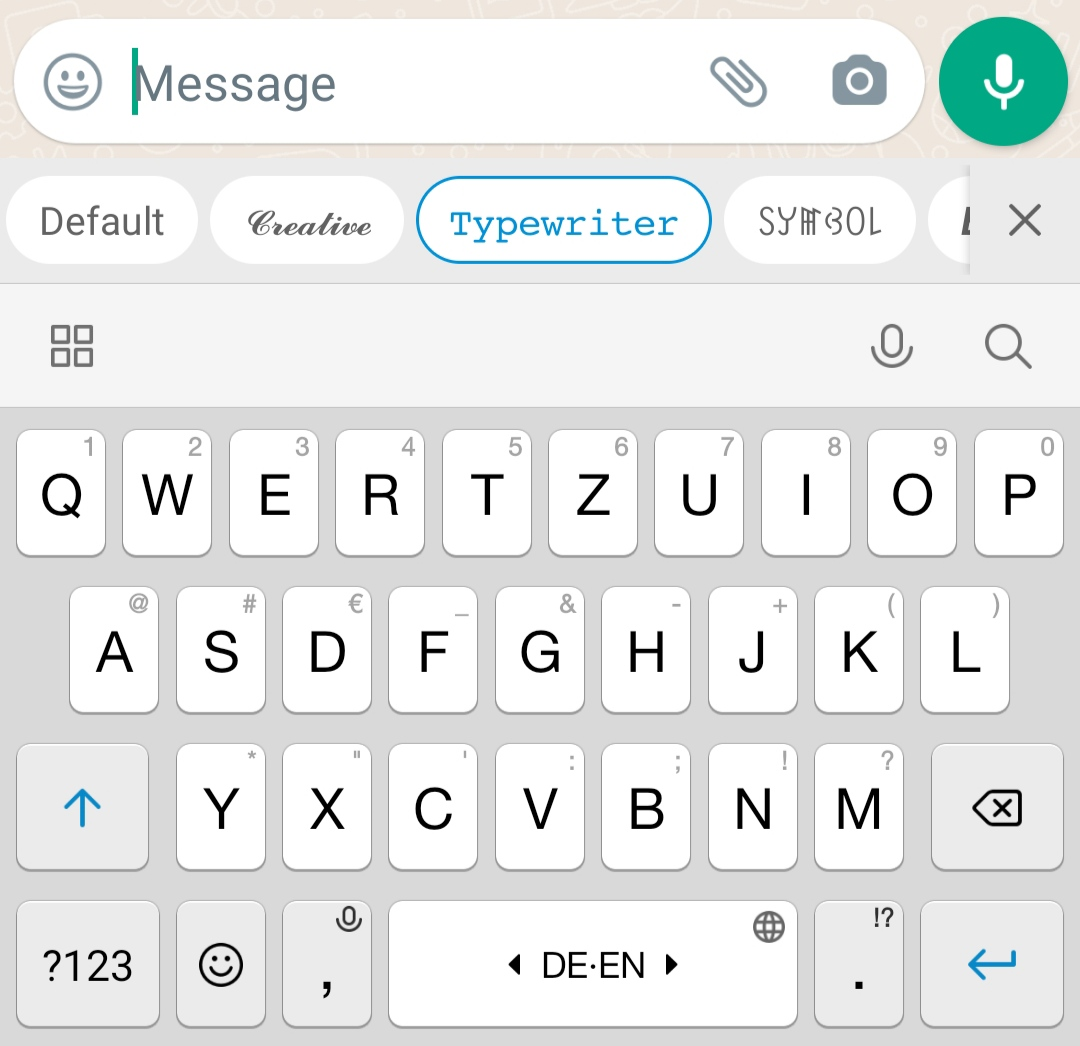 Emoji keyboard formatting options in WhatsApp
Emoji keyboards can provide you with dozens of cool fonts for WhatsApp that are suitable for the language you type in. If your device doesn’t have one, you can find various Emoji keyboards on Google Play or App Store and install them with one click. To find the version with the widest collection of font styles, search specifically for “Emoji keyboard fonts” in your app marketplace.
 The variety of creative fonts for WhatsApp provided by a standard Emoji keyboard
With this method, you can always go back to the default text style or hide the font panel altogether.
How to write in bold in WhatsApp
Bold text is great for drawing attention to certain words or letters in a message. You can also use it to highlight headlines and subheadings, which helps guide your reader through longer messages.
To make your text bold in WhatsApp, place an asterisk on each side of it: *text* → text
You’ll see your text’s appearance change as you type, so you can double-check your formatting before clicking “Send.”
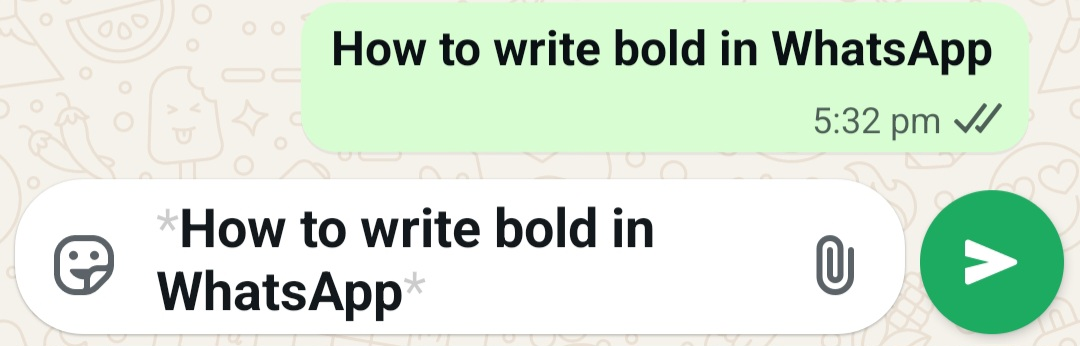 Previewing a formatted bold text message in WhatsApp
Alternatively, you can use WhatsApp shortcuts — tap and hold the text and then choose bold from the pop-up menu.
How to write in italics in WhatsApp
Italic text is often used for emphasis or contrast. It helps draw attention to a specific part of a sentence. You can also use italics in WhatsApp to cite foreign words or phrases.
To write in italics in WhatsApp, place an underscore on both sides of your text: _text_ → text
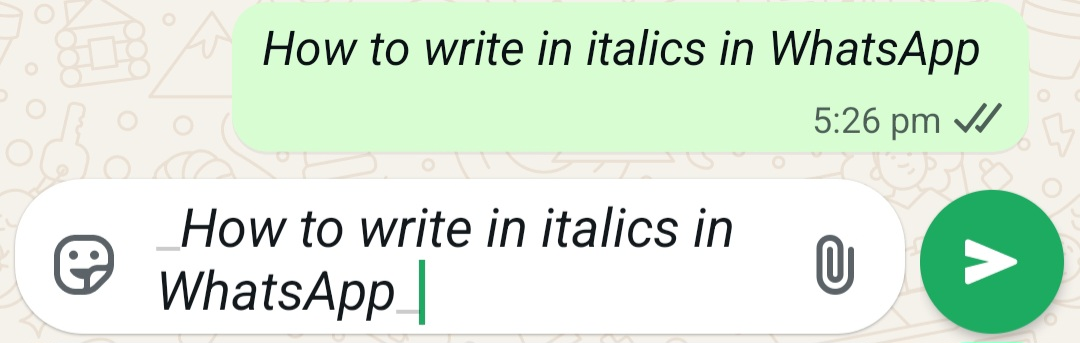 Writing in italics in WhatsApp
Another way to make your text italic is to tap it and choose italics from the pop-up menu.
How to write in strikethrough in WhatsApp
Strikethrough is useful for showing edits, marking outdated information, or highlighting a change of opinion. You can use it to show what has been or needs to be removed from the text.
To strikethrough text in WhatsApp, put tildes around your text: ~text~ → text
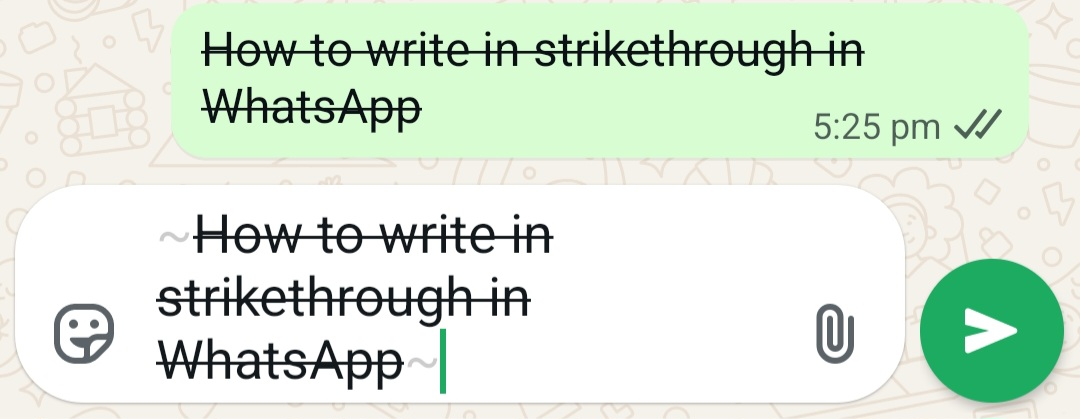 Using strikethrough text in WhatsApp
You can also select your text, click the three-dot icon in the pop-up menu, and choose strikethrough.
How to use monospace in WhatsApp
Monospace text uses a fixed-width font where every character takes up the same amount of space. It’s great for sharing code, technical info, or making your message stand out.
To write in monospace in WhatsApp, place three backticks on each side of your text: ```text``` → text
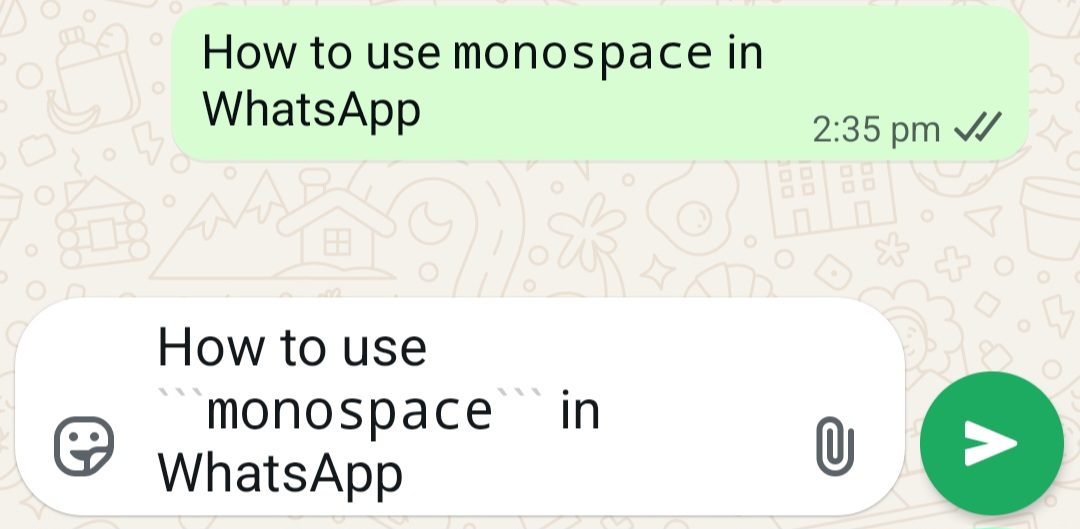 Writing in monospace in WhatsApp
Keep in mind that monospace cannot be combined with other formatting styles. If you try to nest bold or italic markers inside monospace, the markers will be displayed as raw characters instead of being applied.
How to use inline code in WhatsApp
Inline code is like monospace but looks a bit different. It’s perfect for sharing short commands, file paths, variable names, or any small technical detail within a sentence.
To add inline code to your WhatsApp message, place a single backtick on each side of the text: `text` → text
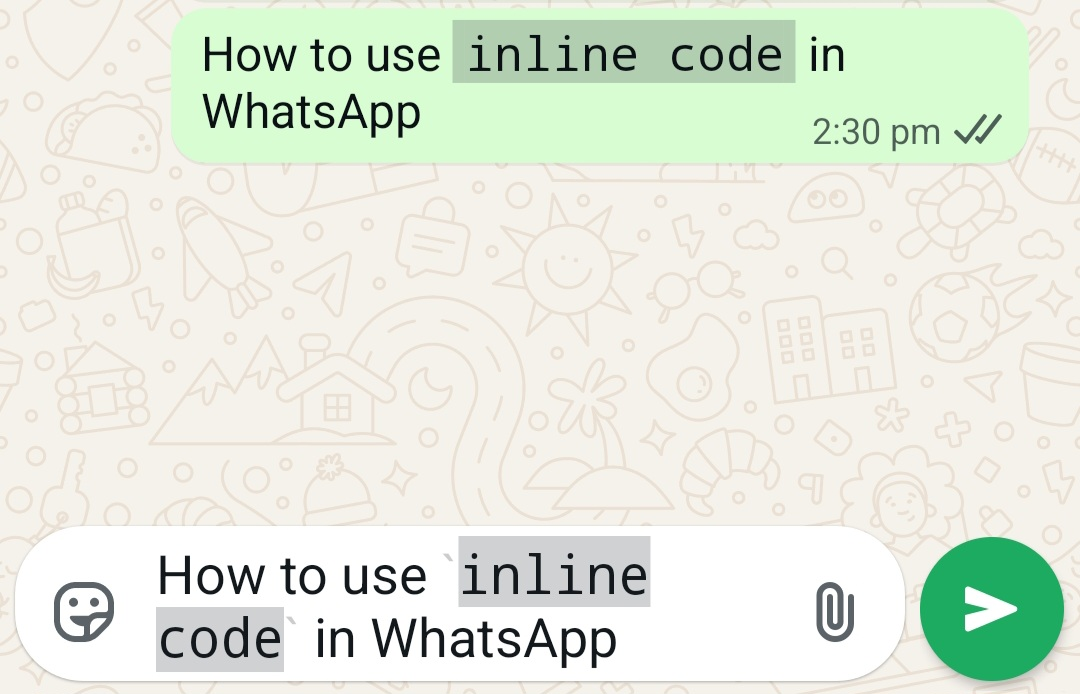 Inline code formatting in WhatsApp
The key difference between inline code and monospace in WhatsApp is visual. Inline code (single backtick) gives the text a highlighted background, making it stand out in a sentence. Monospace (three backticks) uses a fixed-width font without a background. Both can be applied to a single word or a longer phrase.
How to use block quotes in WhatsApp
Block quotes allow you to visually highlight a piece of text, setting it apart from the rest of your message. They’re useful for quoting someone, referencing an earlier message, or drawing attention to something important.
To add a block quote, type the > symbol followed by a space at the beginning of a new line, then enter your text. The quoted text will appear with a vertical bar to its left, making it clearly distinguishable from your own words.
To continue a block quote across multiple lines, start each new line with a > and a space — WhatsApp won’t carry the quote over automatically. To go back to regular text, simply start a new line without the > symbol.
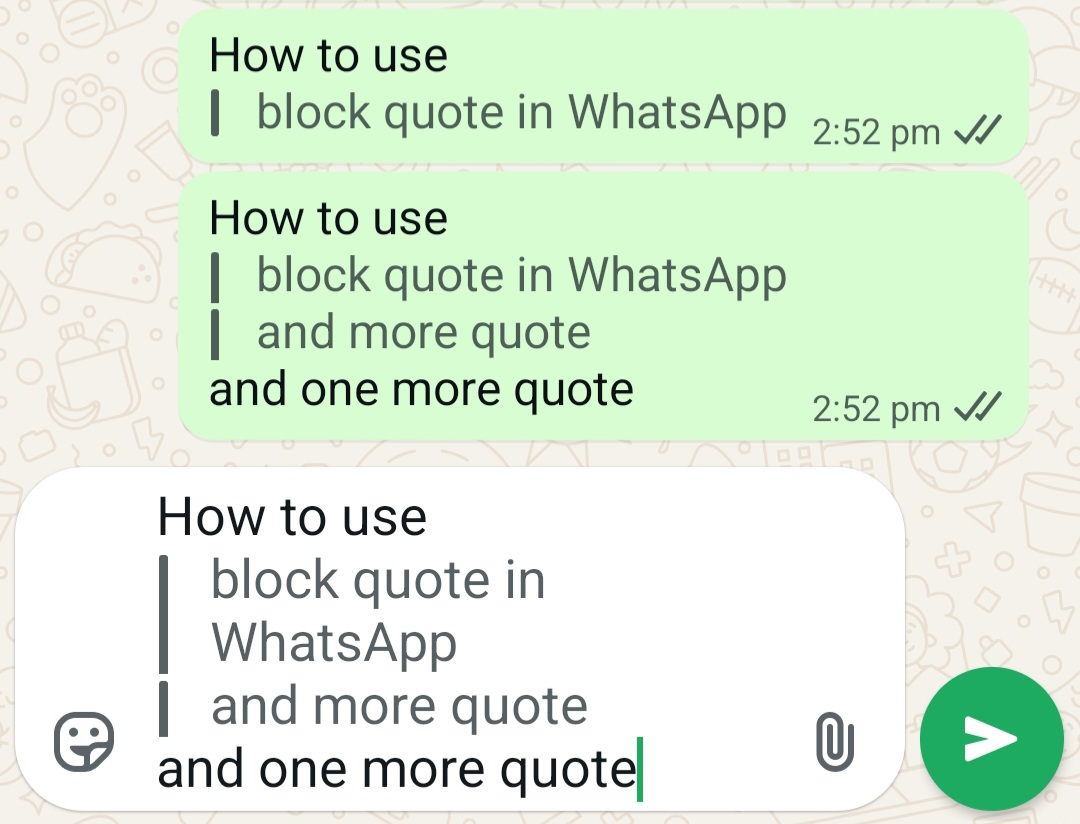 Block quote formatting in WhatsApp
How to create bulleted and numbered lists in WhatsApp
Lists are one of the most practical formatting options in WhatsApp, especially for organizing tasks, instructions, or any structured information. WhatsApp supports both bulleted and numbered lists natively.
Bulleted lists
To add a bulleted list to your message, type a hyphen (-) or an asterisk (*) followed by a space before each item. Press “Enter” to move to the next line and repeat the process:
- First item
- Second item
- Third item
WhatsApp will automatically turn them into a neat bulleted list when you send the message.
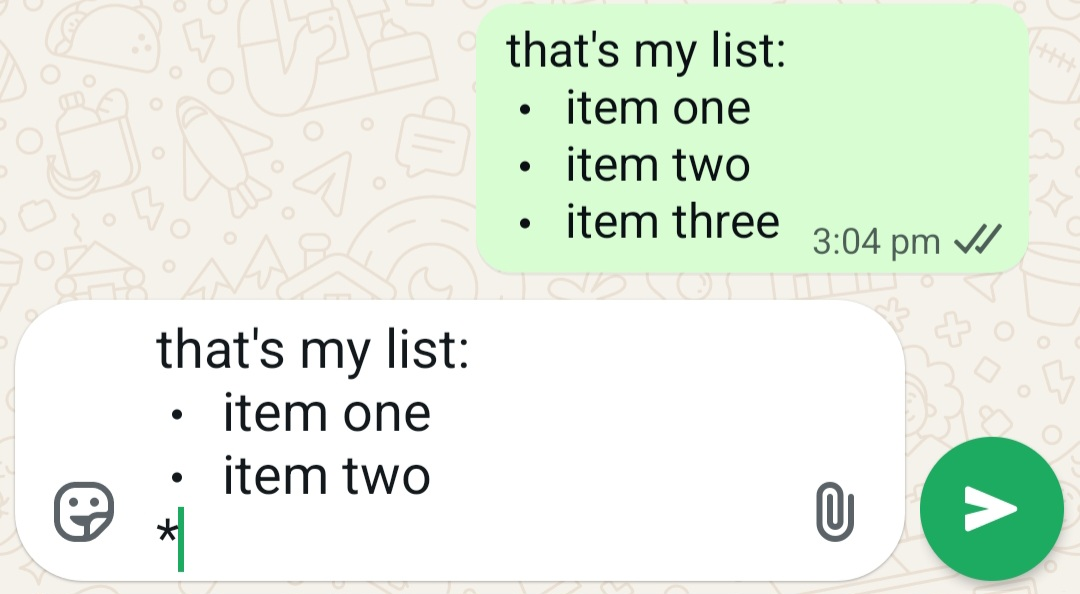 Creating a bulleted list on WhatsApp
Numbered lists
To create a numbered list, type a number followed by a period and a space before each line of text:
1. First step
2. Second step
3. Third step
Once you hit “Enter” after the first numbered item, WhatsApp will continue the numbering automatically until you backspace to stop it.
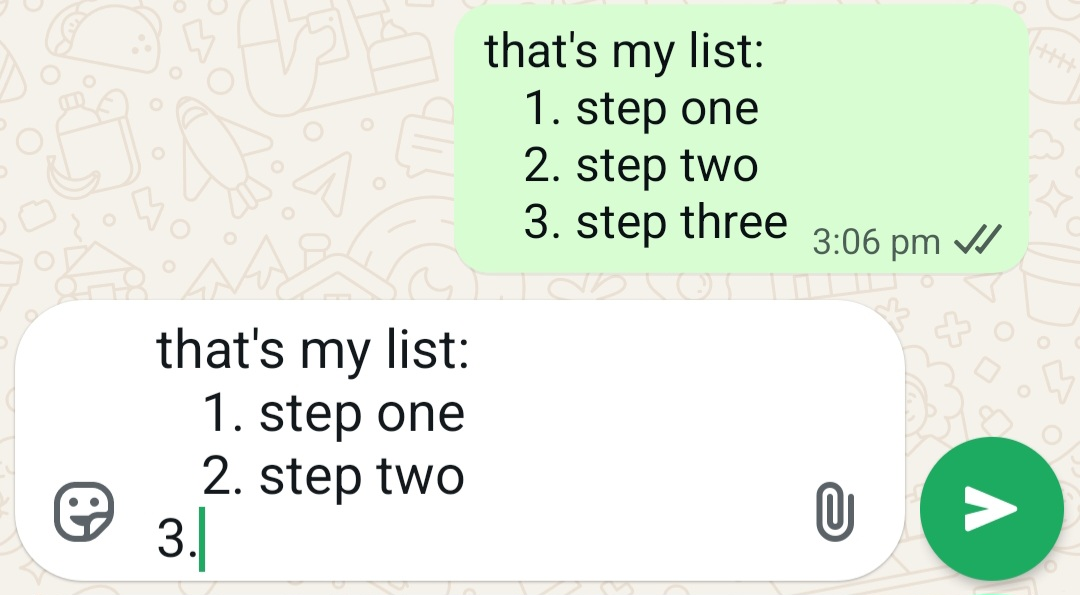 Creating a numbered list on WhatsApp
How to underline text in WhatsApp
There’s no straightforward way to underline text in WhatsApp, and simply copy-pasting it from Google Docs does not work, either. The only way to do that is to rely on third-party apps that generate underlined text using Unicode characters.
In this example, we’re using YayText to underline our text.
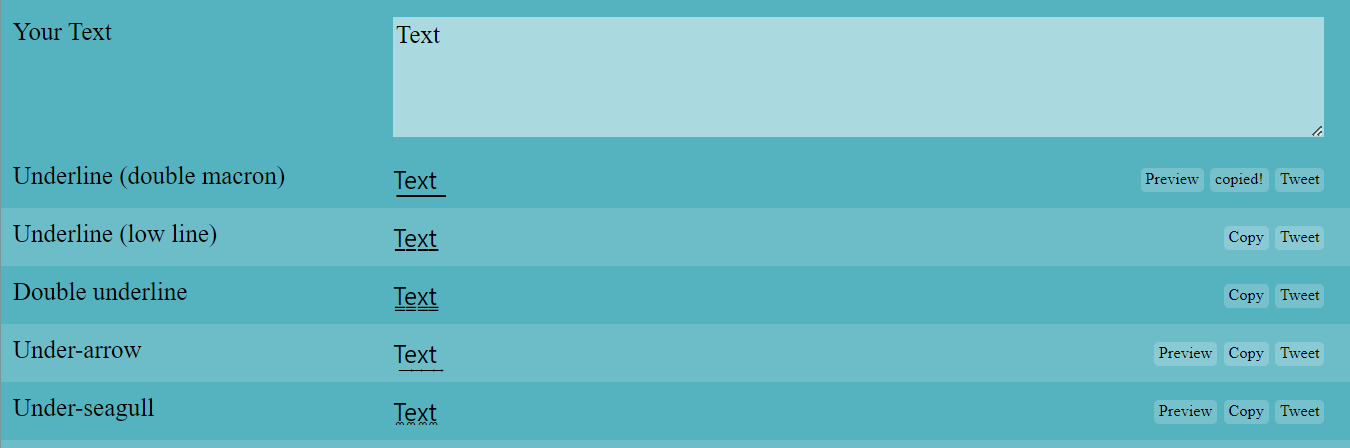 How to underline text for WhatsApp
Glyphy is another reliable option that offers similar functionality. The results can be easily copy-pasted into the text field in the messaging app. This is the closest one can get to imitating the classic underline in WhatsApp, and it should be enough for most cases.
Here’s what underline text looks like in WhatsApp:
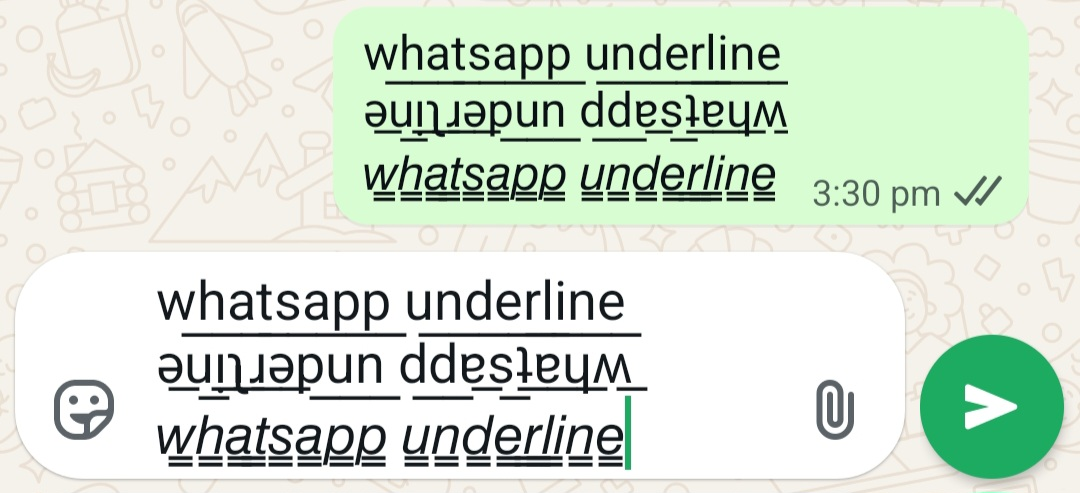 Testing underline text fonts on WhatsApp
Keep in mind that underlined text made with Unicode characters may render differently on various devices and operating systems. It can also cause issues with screen readers and accessibility tools, so use it sparingly and avoid it in business messages where accessibility matters.
Combining formatting styles helps you create a clear visual hierarchy in your message. When used correctly, it makes WhatsApp messages easier to scan, more expressive, and more effective, especially in business communication.
Combined WhatsApp text formatting works best when you want to:
- draw attention to critical information;
- separate headlines from supporting text;
- clarify updates or changes;
- add personality without adding emojis.
WhatsApp allows you to mix bold, italics, and strikethrough to emphasize different parts of your message – the key is to use combinations purposefully instead of doing it purely for decoration.
Check out some common WhatsApp formatting combinations you can try:
| Combination |
When to use it |
Syntax example |
Result |
| Bold + Italics |
Highlight short headlines or key statements inside a message |
*This is _bold and italic_* |
This is bold and italic |
| Bold + Strikethrough |
Show corrections, updates, or replaced information |
*This is bold and ~crossed out~* |
This is bold and crossed out |
| Bold + Italics + Strikethrough |
Emphasize warnings, system-style notes, or playful personal messages |
*~_Bold, italic, and crossed out_~* |
Bold, italic, and crossed out |
Remember: when combining styles, the first symbol opened must be the last one closed. Also, monospace (```) cannot be combined with other formatting styles. |
Be careful when combining styles. If you format too much, it can make your messages hard to read. Overdoing it may also come across as aggressive or spammy, especially when communicating with customers. Here are some best practices to follow:
- use one primary emphasis per message;
- avoid stacking styles on long sentences or paragraphs;
- keep formatting consistent across messages;
- in business chats, prioritize clarity over creativity.
Combined formatting works best when it guides the reader’s eye to what matters most. Use it sparingly, and your messages will feel more professional and easier to process.

Create your free SendPulse account
Start using powerful tools to attract, engage, and retain customers — all on one platform.
Get started for free
If you use WhatsApp Web or the desktop app on Windows or Mac, you can format text faster with keyboard shortcuts. The special character method (like asterisks and underscores) works on desktop too, but WhatsApp also supports standard text editing shortcuts in the message field.
Here are the most useful keyboard shortcuts for WhatsApp formatting on desktop:
| Action |
Windows |
Mac |
| Bold selected text |
Ctrl + B |
Cmd + B |
| Italicize selected text |
Ctrl + I |
Cmd + I |
| Strikethrough selected text |
Ctrl + Shift + X |
Cmd + Shift + X |
| Inline code |
Ctrl + Shift + I |
Cmd + Shift + I |
| Bulleted list |
Ctrl + Shift + 7 |
Cmd + Shift + 7 |
| Numbered list |
Ctrl + Shift + 8 |
Cmd + Shift + 8 |
| Block quote |
Ctrl + Shift + . |
Cmd + Shift + . |
| Select all text |
Ctrl + A |
Cmd + A |
| Copy |
Ctrl + C |
Cmd + C |
| Paste |
Ctrl + V |
Cmd + V |
| Undo |
Ctrl + Z |
Cmd + Z |
To use these shortcuts, select the text you want to format first, then press the corresponding key combination. The formatting will be applied instantly, just as it would if you manually typed the special characters around the text.
If you use a WhatsApp Business API provider to send messages at scale — whether through chatbots, broadcast campaigns, or automated flows — you can use the same text formatting options to make your messages more readable and professional.
The WhatsApp Business API supports the following formatting in both template messages and free-form service messages (those sent during an open customer service window):
- bold:
*text*
- italic:
_text_
- strikethrough:
~text~
- monospace:
```text```
When using official providers like SendPulse, you can also use a built-in formatting toolbar in the campaign editor and chatbot builder to format your text and preview it right away.
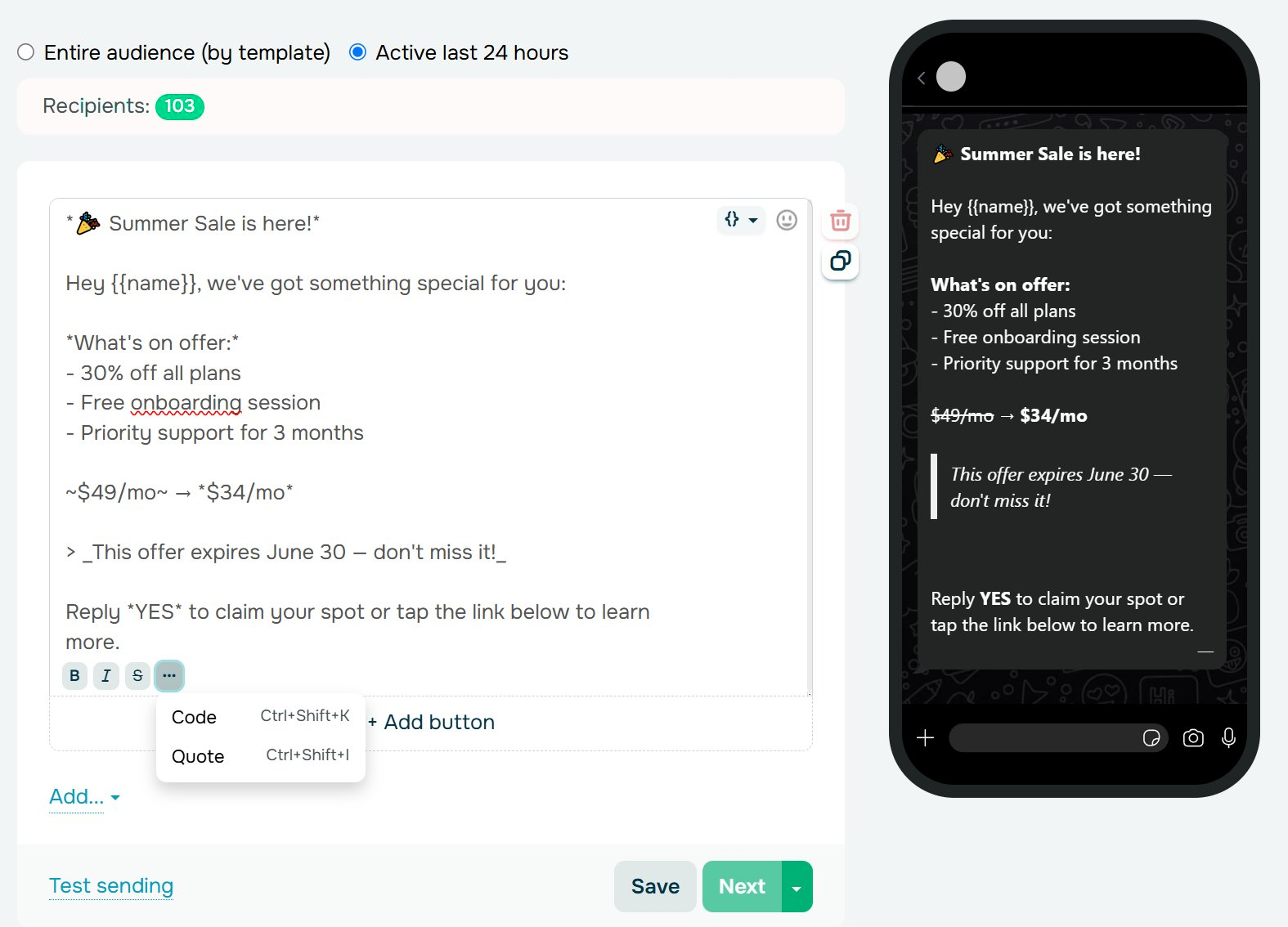 A built-in formatting toolbar in the WhatsApp campaign editor and the formatted message preview
Here are a few important things to keep in mind when formatting API messages:
- Spacing matters. Always add a space before and after the formatted block (not between the markers and the text itself) when it appears mid-sentence. If formatting is at the beginning or end, add a space only on the non-formatted side.
- Character limits apply. Formatting characters count toward character limits that template and service messages allow.
- Test before sending. Always send a test message to your own number to verify that formatting renders correctly, especially with special characters or long names.
- Don’t overdo it. Sending messages with excessive formatting can lower your quality rating and may make your messages look spammy to recipients.
Finding and using cool fonts for WhatsApp
What if default styles are not enough? In that case, you can try out apps that give you access to more unique creative fonts combined with emojis, symbols, and ASCII characters. These trendy fonts are typically mobile-friendly and can be copy-pasted directly into WhatsApp.
For instance, the website Fonts for WhatsApp allows you to go beyond the styles any standard Emoji keyboard offers.
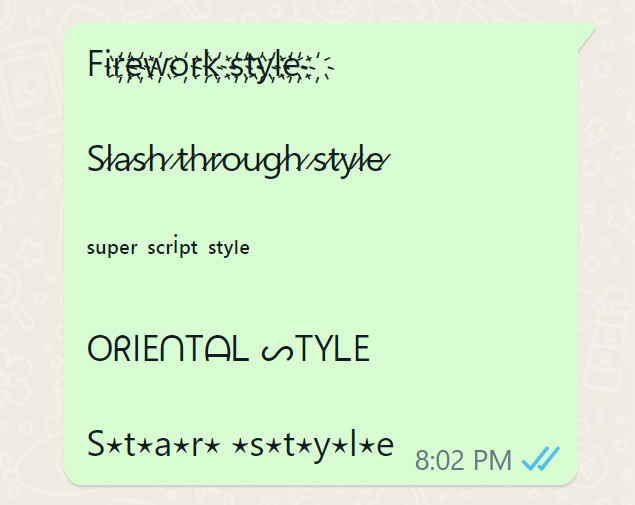 Creative fonts for WhatsApp
To find truly creative and playful fonts for expressing your individuality and supporting your brand’s identity, type “WhatsApp fonts” in the search field of your browser. Then, pick the style you like, enter your text, and copy the formatted version.
Most of these “cool fonts” are actually Unicode symbols and special characters, not real fonts. While they look great visually, they can cause issues with screen readers, search, and translation tools. For this reason, it’s best to use them in casual conversations rather than in business or customer-facing messages.
Troubleshooting WhatsApp text formatting
If your formatted text isn’t displaying as expected, here are the most common reasons and how to fix them:
- No spaces between symbols and text. This is the most common issue. Make sure there are no spaces between the formatting characters and the text they enclose. For example,
* text * won’t work; it must be *text*.
- Outdated app version. Some formatting options, such as bulleted lists, numbered lists, block quotes, and inline code, were added in early 2024. If you don’t see them, update WhatsApp to the latest version from Google Play or the App Store.
- Platform rendering differences. Formatted text may look slightly different across Android, iOS, and WhatsApp Web due to font rendering. The formatting itself works the same way on all platforms, but the visual appearance can vary.
- Monospace overriding other styles. You can’t combine monospace with bold, italics, or strikethrough. If you use triple backticks with other markers, monospace will take priority, and the other symbols will just show as plain text.
- Displaying formatting characters literally. WhatsApp doesn’t have an escape character. If you want to show an asterisk or tilde without formatting, wrap your text in monospace (
```). This turns off all other formatting inside it.
If the issue persists, check the WhatsApp Help Center for the latest bugs and updates related to text formatting.
Final thoughts
Knowing how to format your WhatsApp messages is a small skill that makes a noticeable difference, whether you’re chatting with friends or communicating with customers at scale. Using bold, italics, lists, and other styles makes your messages easier to read, more professional, and harder to ignore.
If you’re ready to take your WhatsApp communication further, SendPulse can help. As an official WhatsApp Business API provider, we offer a visual chatbot builder, broadcast campaigns, and a built-in formatting toolbar so you can apply everything you’ve learned in this guide without using a single special character. Create your free account and see for yourself.
WhatsApp formatting FAQs
Does WhatsApp allow formatting?
Yes. WhatsApp supports bold, italic, strikethrough, monospace, inline code, block quotes, and bulleted and numbered lists. You can apply these styles using special characters, keyboard shortcuts, or the pop-up menu.
Can I format text in WhatsApp?
Yes, on all platforms. Formatting works the same way on Android, iOS, WhatsApp Web, and the desktop app. Wrap your text in special characters or use keyboard shortcuts.
How do I underline text in WhatsApp?
There’s no built-in underline option. You can use third-party Unicode text generators, then copy the result into WhatsApp. Keep in mind that the Unicode underline may not render consistently across all devices.
How do I write italics in WhatsApp?
Place an underscore (_) on each side of your text. You can also select the text and choose italic from the pop-up menu, or use Ctrl/Cmd+I on desktop.
Can I create a list in WhatsApp chat?
Yes. For a bulleted list, type a hyphen (-) or asterisk (*) followed by a space before each item. For a numbered list, type a number, period, and space. WhatsApp formats them automatically once you send the message.